
Atmosphere | Learn About Earth's Air Layers
1 Comments
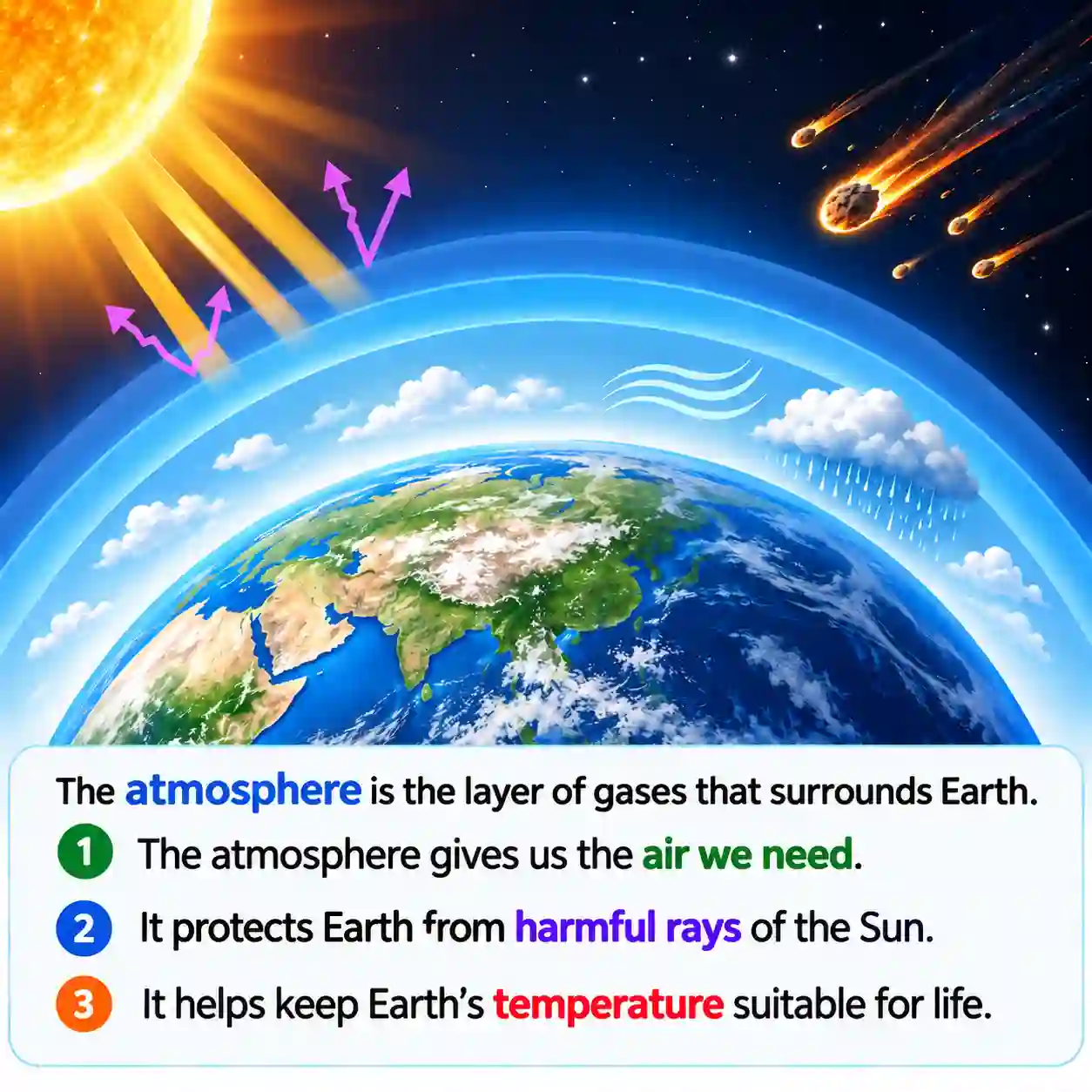
The atmosphere is the thick layer of gases that surrounds Earth. It contains the air we breathe and plays an important role in supporting life. It also protects our planet from harmful radiation and helps maintain a suitable temperature. The air around us, including the air we breathe, is a part of the atmosphere.
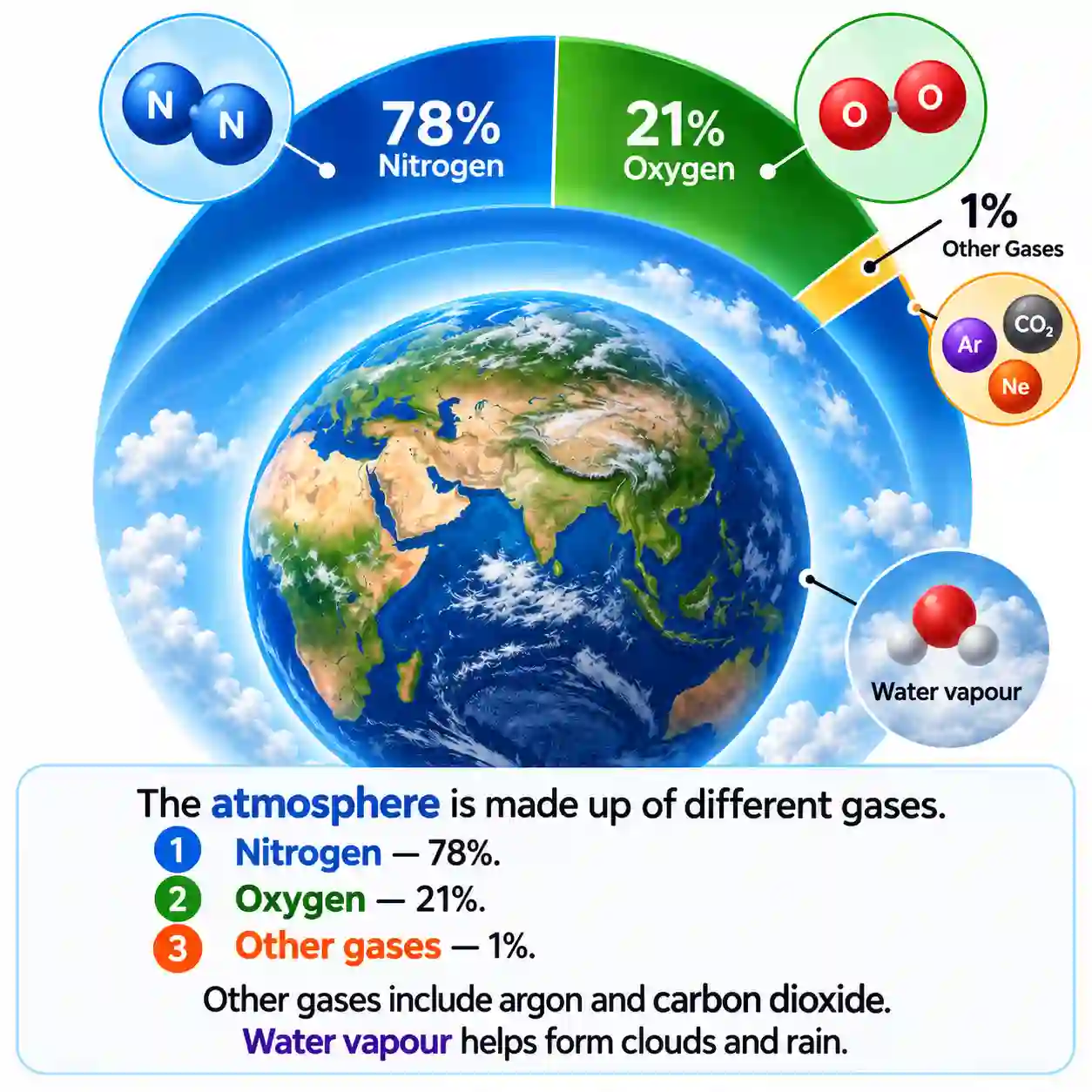
The atmosphere is made up of different gases. Nitrogen forms about 78% of the atmosphere, while oxygen makes up about 21%. The remaining 1% includes other gases, such as argon, carbon dioxide, and small amounts of other gases. Water vapour is also present in the atmosphere and plays an important role in forming clouds and rainfall.
The atmosphere is essential for life on Earth. It provides oxygen for breathing, helps keep our planet warm, and protects us from much of the Sun's harmful ultraviolet radiation. It also plays a major role in weather, wind, and rainfall. In addition, many small meteoroids burn up as they pass through the atmosphere, helping protect Earth's surface.
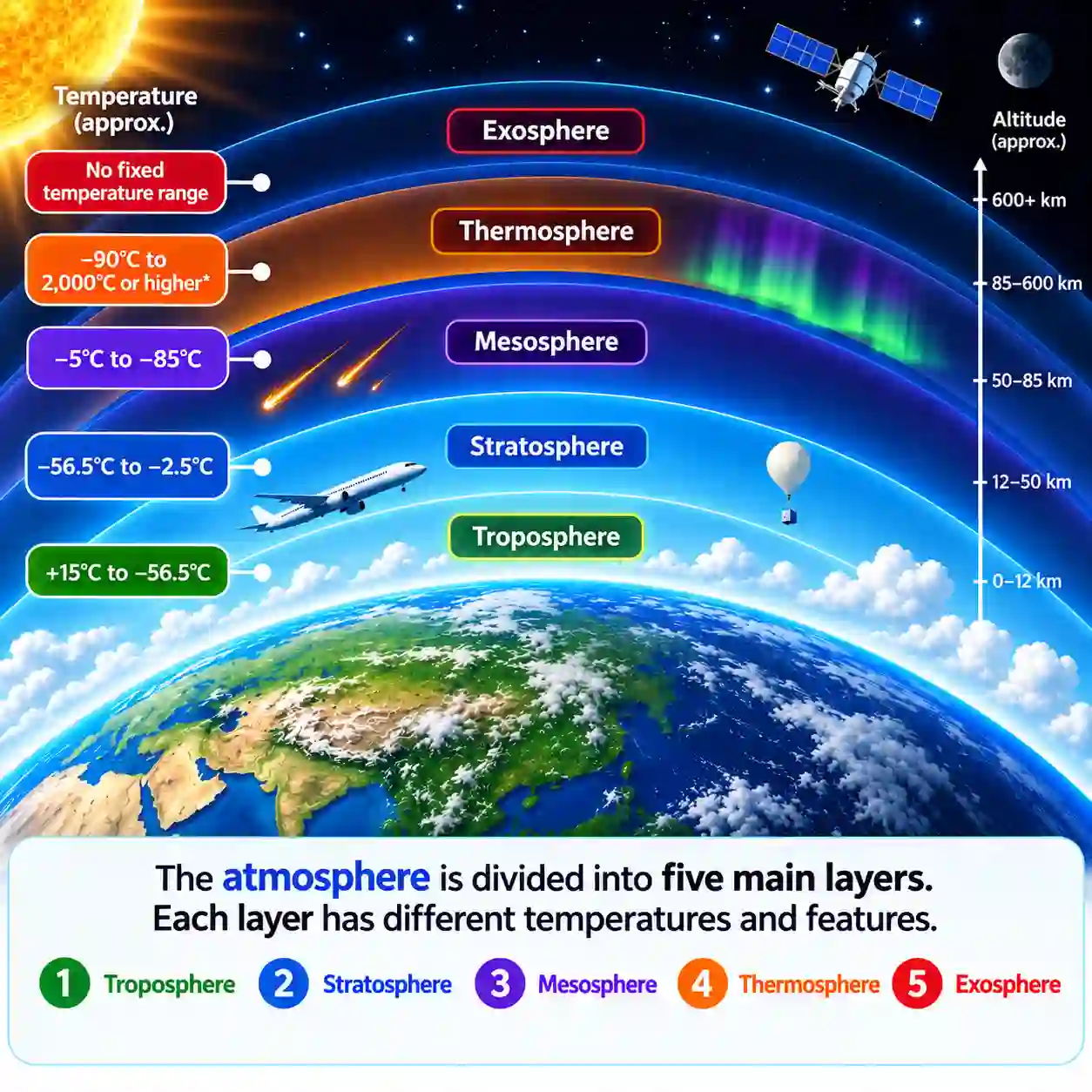
The atmosphere is divided into five main layers based on changes in temperature and other characteristics. These layers are the Troposphere, Stratosphere, Mesosphere, Thermosphere, and Exosphere. Each layer has its own features and plays a different role in the environment around Earth.
- Troposphere - The troposphere is the lowest layer of the atmosphere and the layer closest to Earth's surface. We live in this layer, and it contains most of the atmosphere's water vapour. Almost all weather changes, such as clouds, rain, wind, and storms, take place here. It is the most important atmospheric layer for our daily life.
- Stratosphere - The stratosphere lies above the troposphere and contains the important ozone layer. The ozone layer absorbs much of the Sun's harmful ultraviolet rays and helps protect living things on Earth. The air in this layer is generally more stable, and many commercial airplanes fly in the lower part of the stratosphere.
- Mesosphere - The mesosphere lies above the stratosphere and is known as one of the coldest layers of the atmosphere. Many meteoroids entering Earth's atmosphere burn up in this layer because of friction with the air. This is why the mesosphere is often called the layer of meteors. It helps protect Earth from many small space rocks.
- Thermosphere - The thermosphere lies above the mesosphere and can reach extremely high temperatures because it absorbs high-energy radiation from the Sun. This layer includes much of the ionosphere, which plays an important role in radio communication. Colourful natural lights called auroras can also be seen in this region.
- Exosphere - The exosphere is the outermost layer of Earth's atmosphere. The gases here are extremely thin, and the particles are very far apart. This layer gradually merges into outer space. Some satellites orbit in or pass through this region, making the exosphere an important part of the space around Earth.
You must be logged in to add a comment.
Login to Comment