
English Grammar for Kids



1 Comments
PRONOUN
A pronoun is a word used in place of a noun or noun phrase to avoid repetition.
Example:
Rahul is a student. He is intelligent.
Here, He replaces Rahul.
Types of Pronouns
Personal • Possessive • Reflexive • Demonstrative • Relative • Interrogative • Indefinite • Distributive
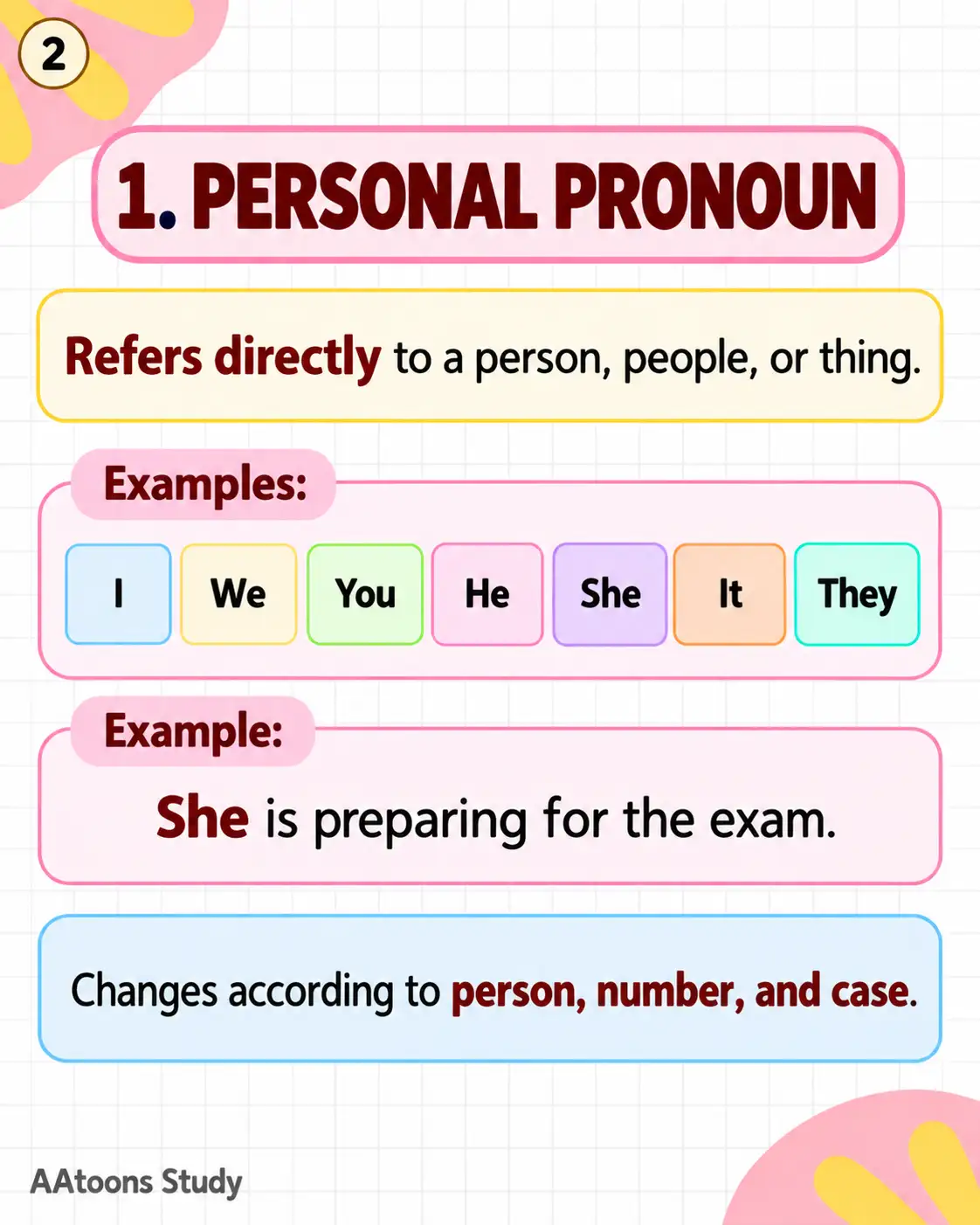
1. PERSONAL PRONOUN
Refers directly to a person, people, or thing.
Examples:
I • We • You • He • She • It • They
Example:
She is preparing for the exam.
Changes according to person, number, and case.
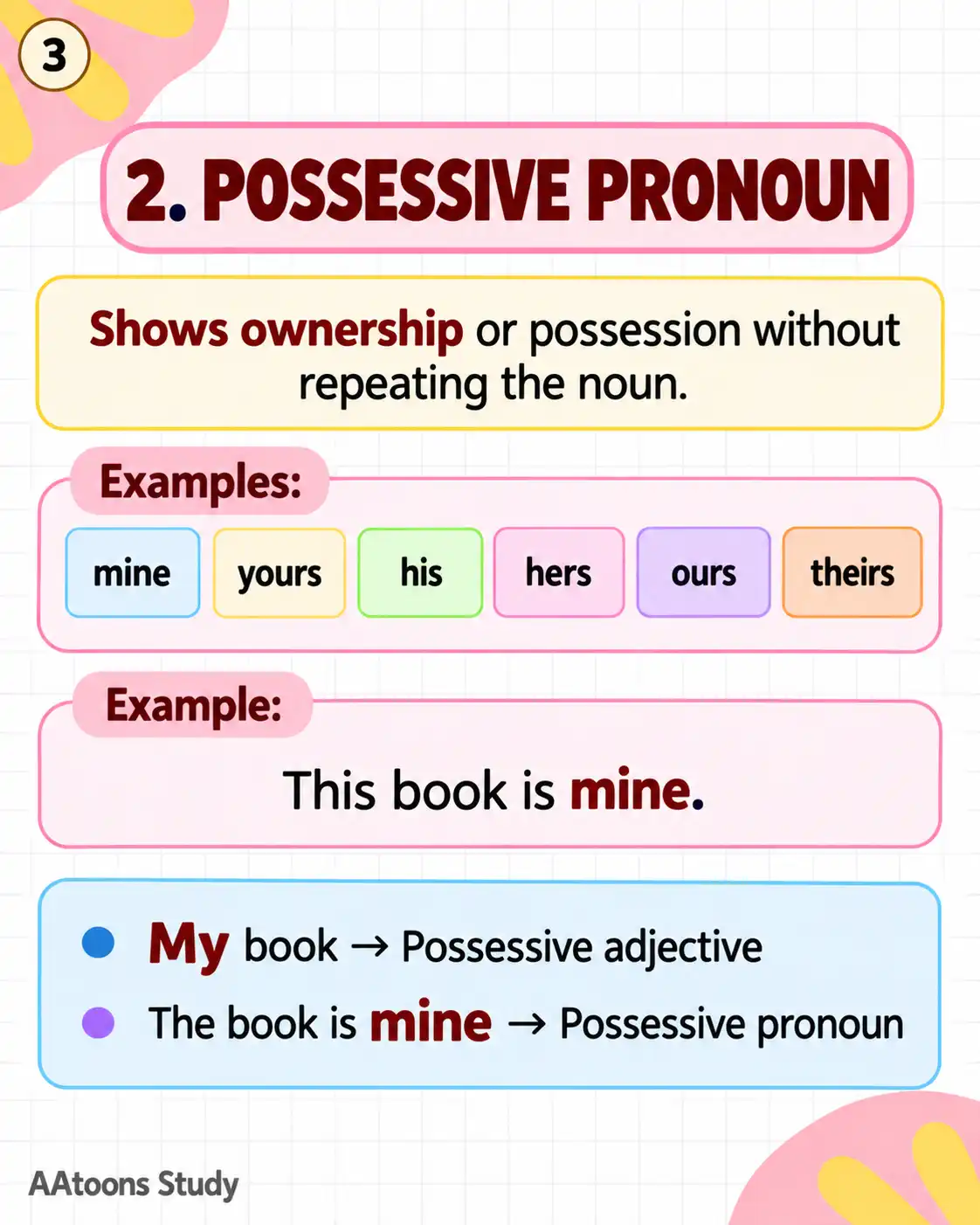
2. POSSESSIVE PRONOUN
Shows ownership or possession without repeating the noun.
Examples:
mine • yours • his • hers • ours • theirs
Example:
This book is mine.
My book → Possessive adjective
The book is mine → Possessive pronoun
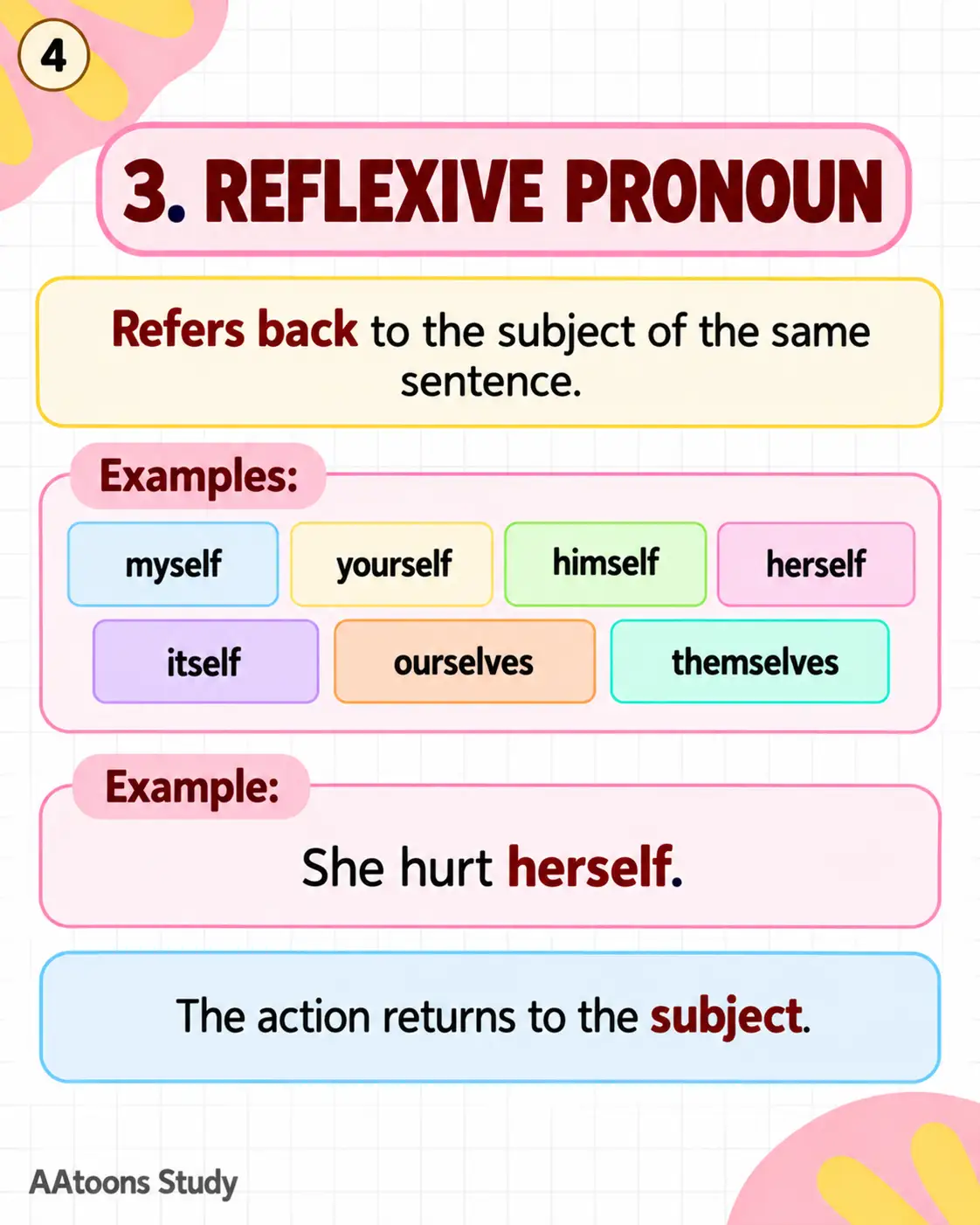
3. REFLEXIVE PRONOUN
Refers back to the subject of the same sentence.
Examples:
myself • yourself • himself • herself • itself • ourselves • themselves
Example:
She hurt herself.
The action returns to the subject.
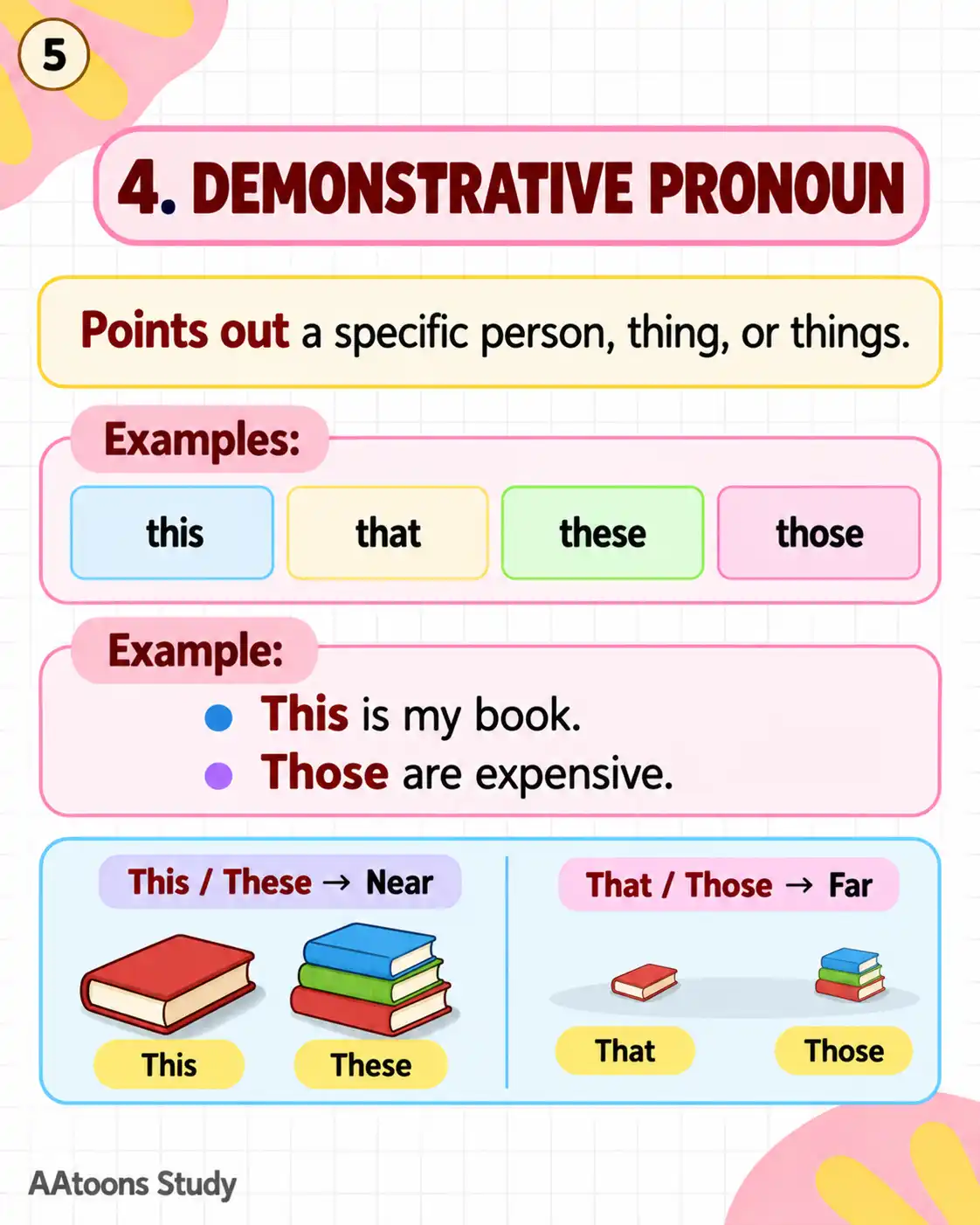
4. DEMONSTRATIVE PRONOUN
Points out a specific person, thing, or things.
Examples:
this • that • these • those
Example:
This is my book.
Those are expensive.
This / These → Near
That / Those → Far
5. RELATIVE PRONOUN
Introduces a relative clause and connects it to a noun mentioned earlier.
Examples:
who • whom • whose • which • that
Example:
The man who called me is my teacher.
Who → Subject
Whom → Object
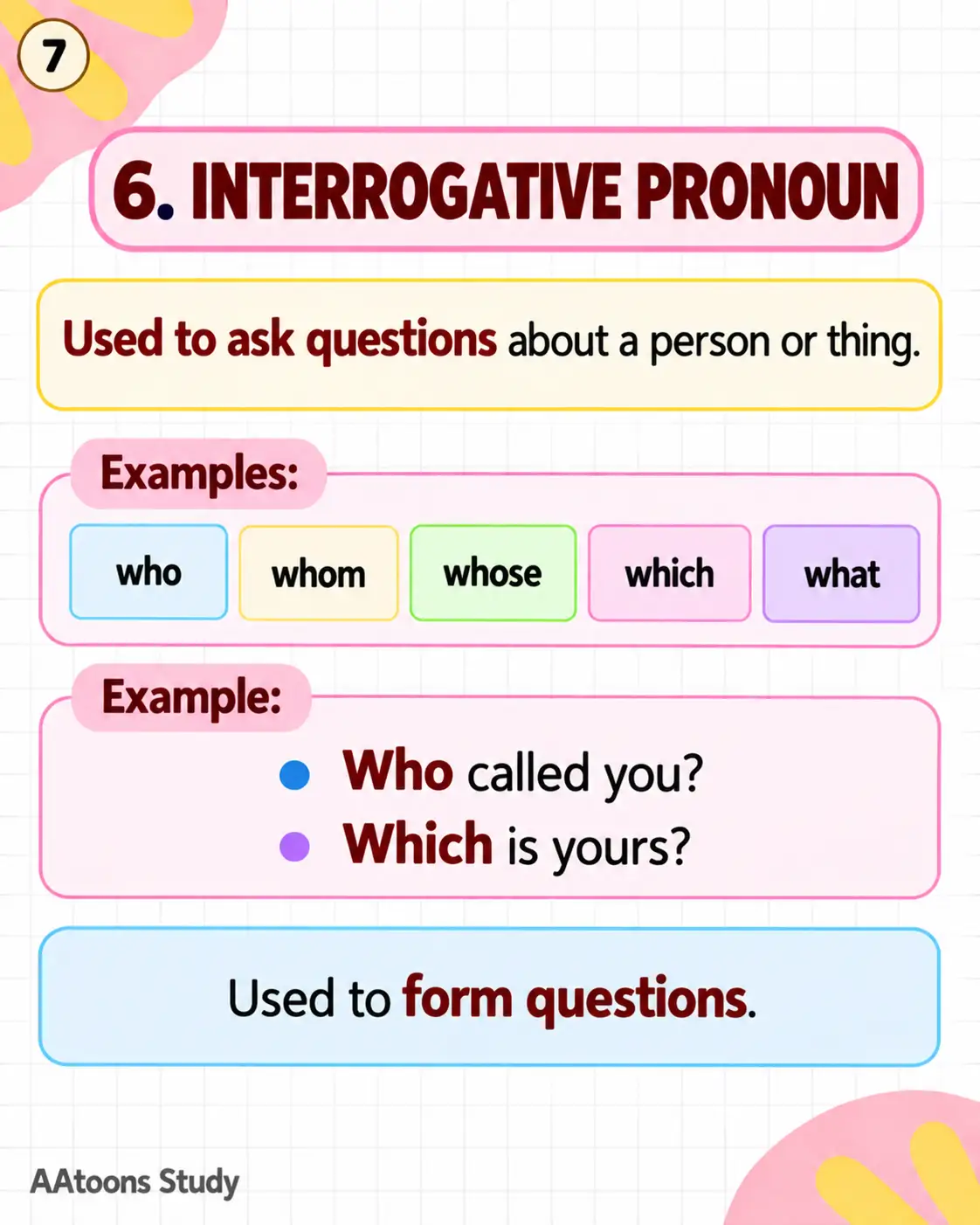
6. INTERROGATIVE PRONOUN
Used to ask questions about a person or thing.
Examples:
who • whom • whose • which • what
Examples:
Who called you?
Which is yours?
Used to form questions.
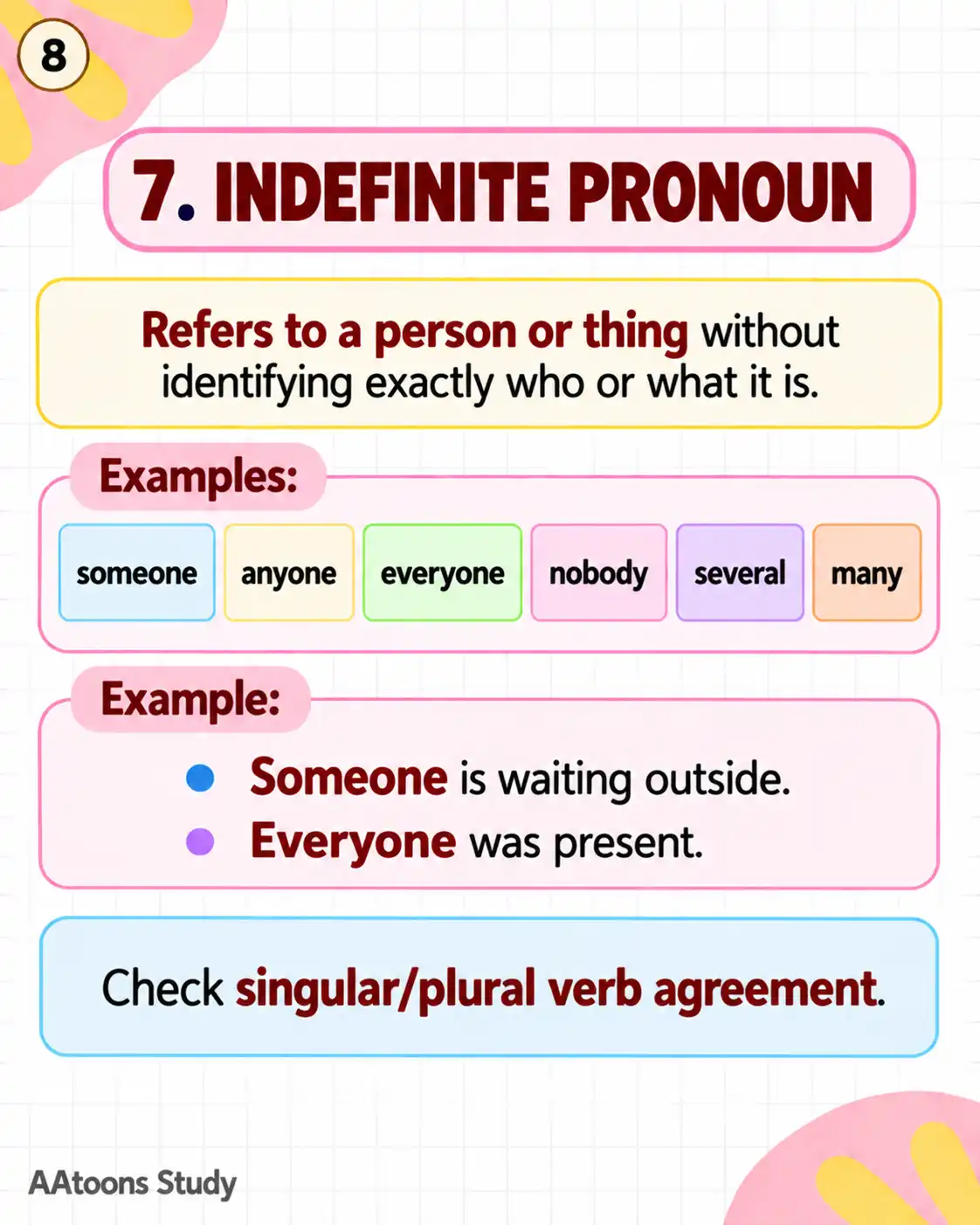
7. INDEFINITE PRONOUN
Refers to a person or thing without identifying exactly who or what it is.
Examples:
someone • anyone • everyone • nobody • several • many
Examples:
Someone is waiting outside.
Everyone was present.
Check singular/plural verb agreement.
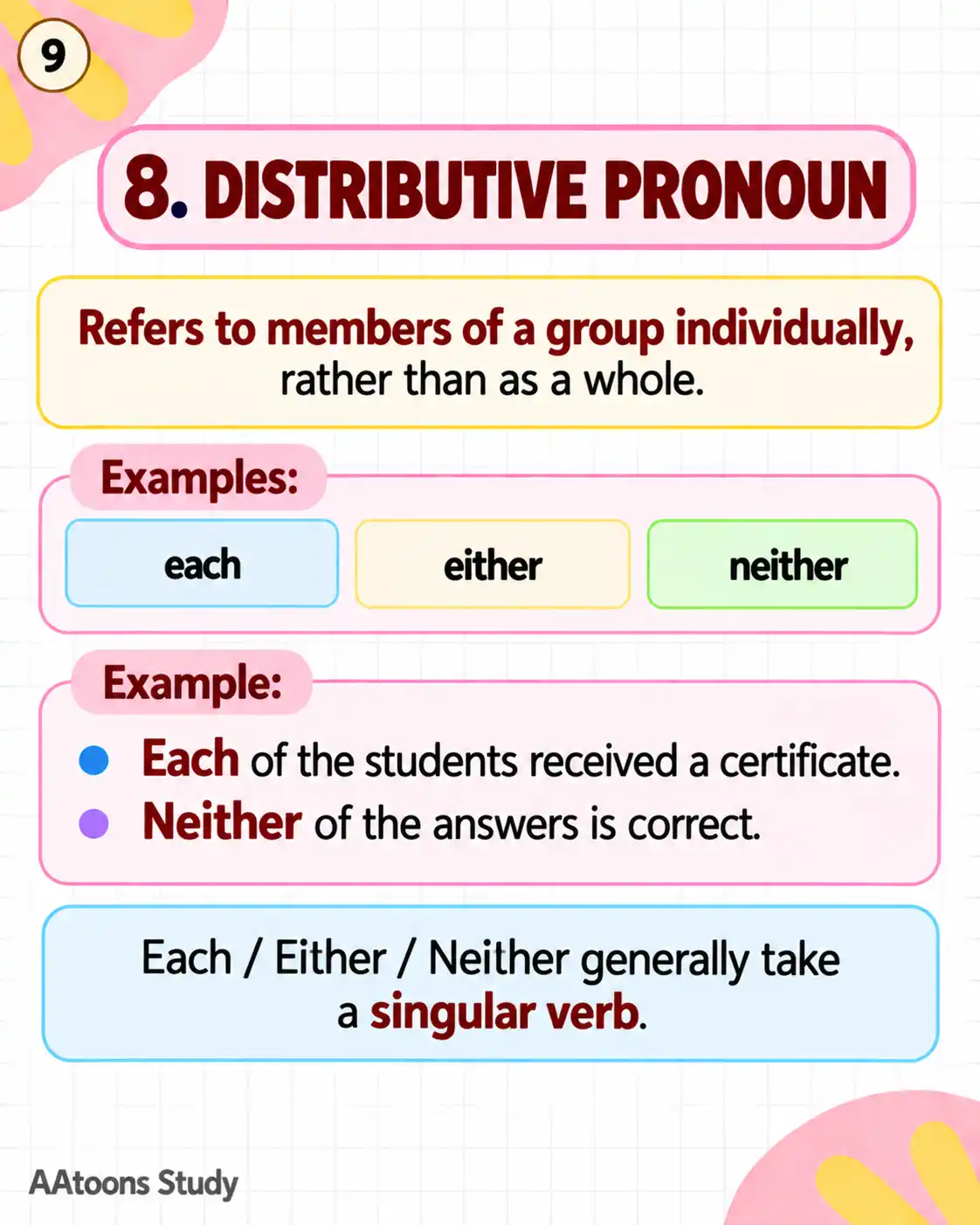
8. DISTRIBUTIVE PRONOUN
Refers to members of a group individually, rather than as a whole.
Examples:
each • either • neither
Examples:
Each of the students received a certificate.
Neither of the answers is correct.
Each / Either / Neither generally take a singular verb.
QUICK REVISION
Personal → I, you, he, they
Possessive → mine, yours, ours
Reflexive → myself, herself, themselves
Demonstrative → this, that, these, those
Relative → who, whom, which, that
Interrogative → who, what, which
Indefinite → someone, everyone, nobody
Distributive → each, either, neither
Identify the pronoun → Identify its type → Check its grammatical role.
You must be logged in to add a comment.
Login to Comment