
Rani Lakshmibai Biography | The Story of the Queen of Jhansi
1 Comments
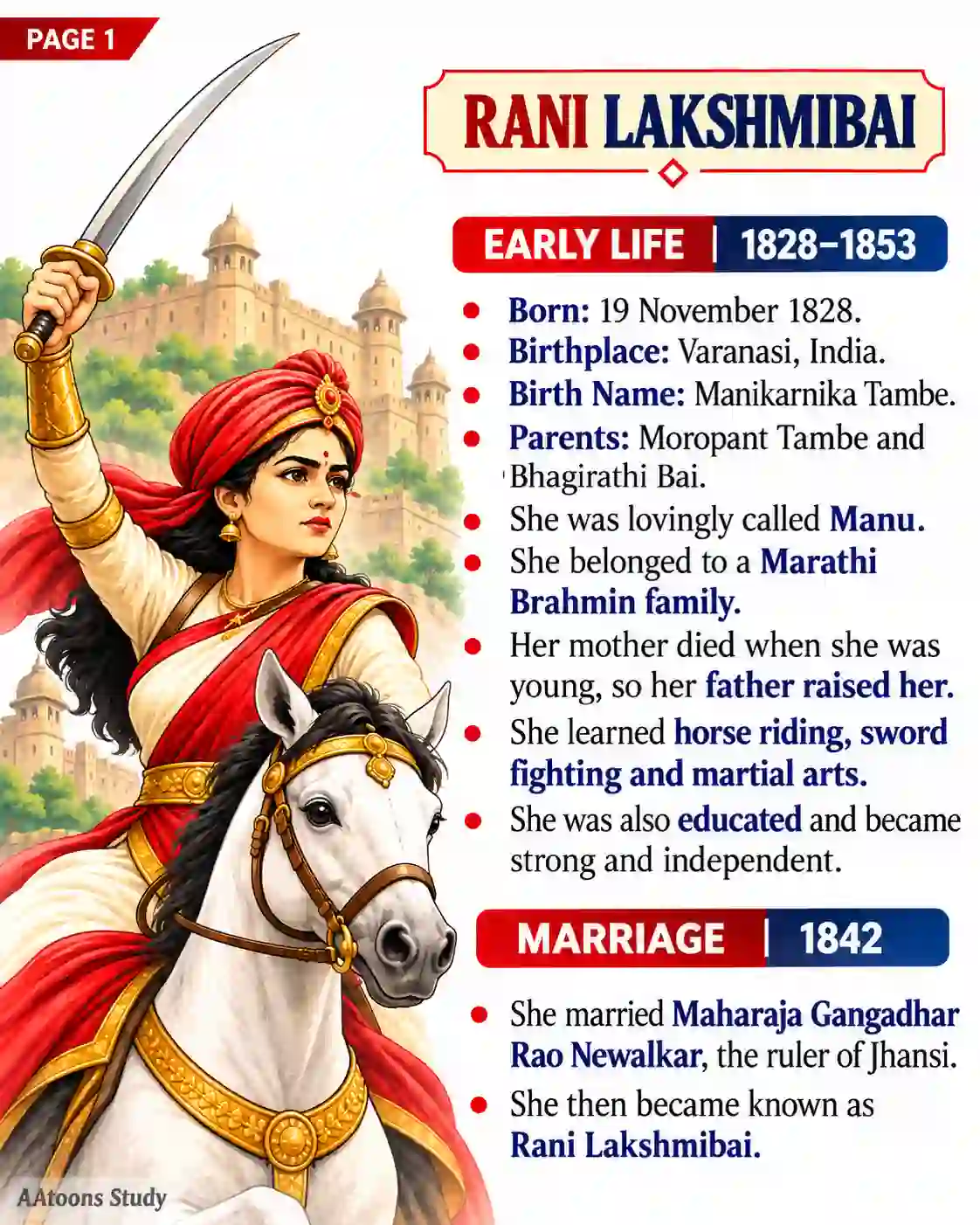
EARLY LIFE (1828–1853)
- Born: Rani Lakshmibai was born on 19 November 1828.
- Birthplace: She was born in Varanasi, India.
- Birth Name: Her birth name was Manikarnika Tambe.
- Parents: Her parents were Moropant Tambe and Bhagirathi Bai.
- Popular Name: She was lovingly called Manu.
HER EARLY LIFE
- Manikarnika, or Manu, belonged to a Marathi Brahmin family.
- Her mother, Bhagirathi Bai, died when Manu was very young.
- After her mother's death, her father Moropant Tambe raised her.
- Manu grew up to be a strong, confident and independent girl.
- At a time when many girls did not receive such training, Manu learned horse riding, sword fighting and martial arts.
- She was also educated, which helped her develop a strong and independent personality.
MARRIAGE
- In 1842, Manu married Maharaja Gangadhar Rao Newalkar, the ruler of Jhansi.
- After her marriage, she became known as Rani Lakshmibai.
- As the Queen of Jhansi, she became closely involved in the affairs of the state.
- She became known for her courage, determination and strong leadership.
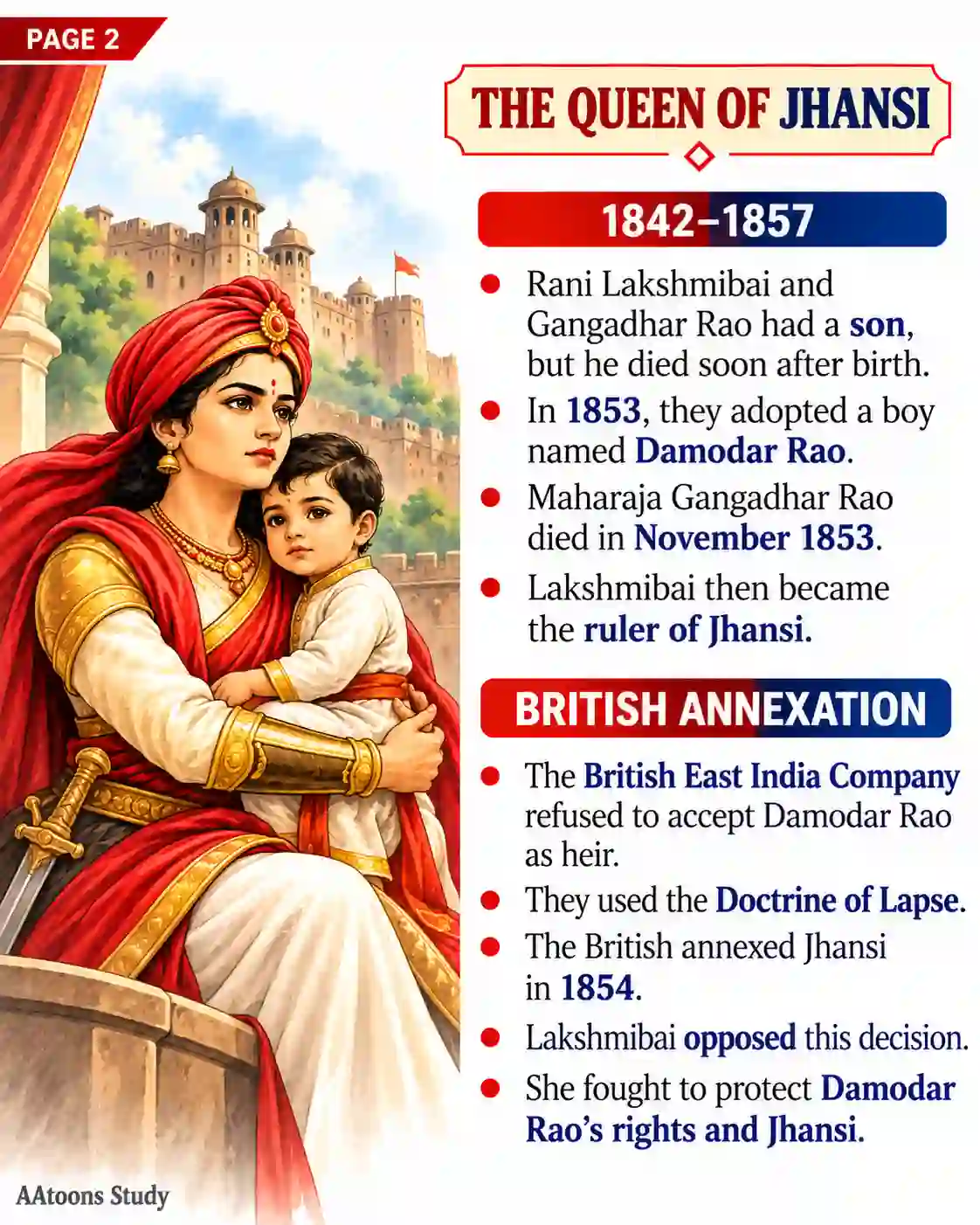
THE QUEEN OF JHANSI (1842–1857)
FAMILY & ADOPTION
- Rani Lakshmibai and Maharaja Gangadhar Rao had a son.
- Sadly, their son died shortly after birth.
- In 1853, the couple adopted a boy named Damodar Rao.
- Damodar Rao was adopted as their son and heir to the throne of Jhansi.
DEATH OF MAHARAJA GANGADHAR RAO
- Maharaja Gangadhar Rao died in November 1853.
- After his death, Lakshmibai was left to govern Jhansi.
- She wanted to protect the rights of her adopted son, Damodar Rao.
THE BRITISH DECISION
- The British East India Company refused to recognise Damodar Rao as the rightful heir.
- The British used the Doctrine of Lapse to reject his claim to the throne.
- As a result, the British annexed Jhansi in 1854.
- Rani Lakshmibai strongly opposed this decision.
- She wanted to protect both Damodar Rao's rights and the kingdom of Jhansi.
RANI LAKSHMIBAI IN THE REVOLT (1857–1858)
THE REVOLT REACHES JHANSI
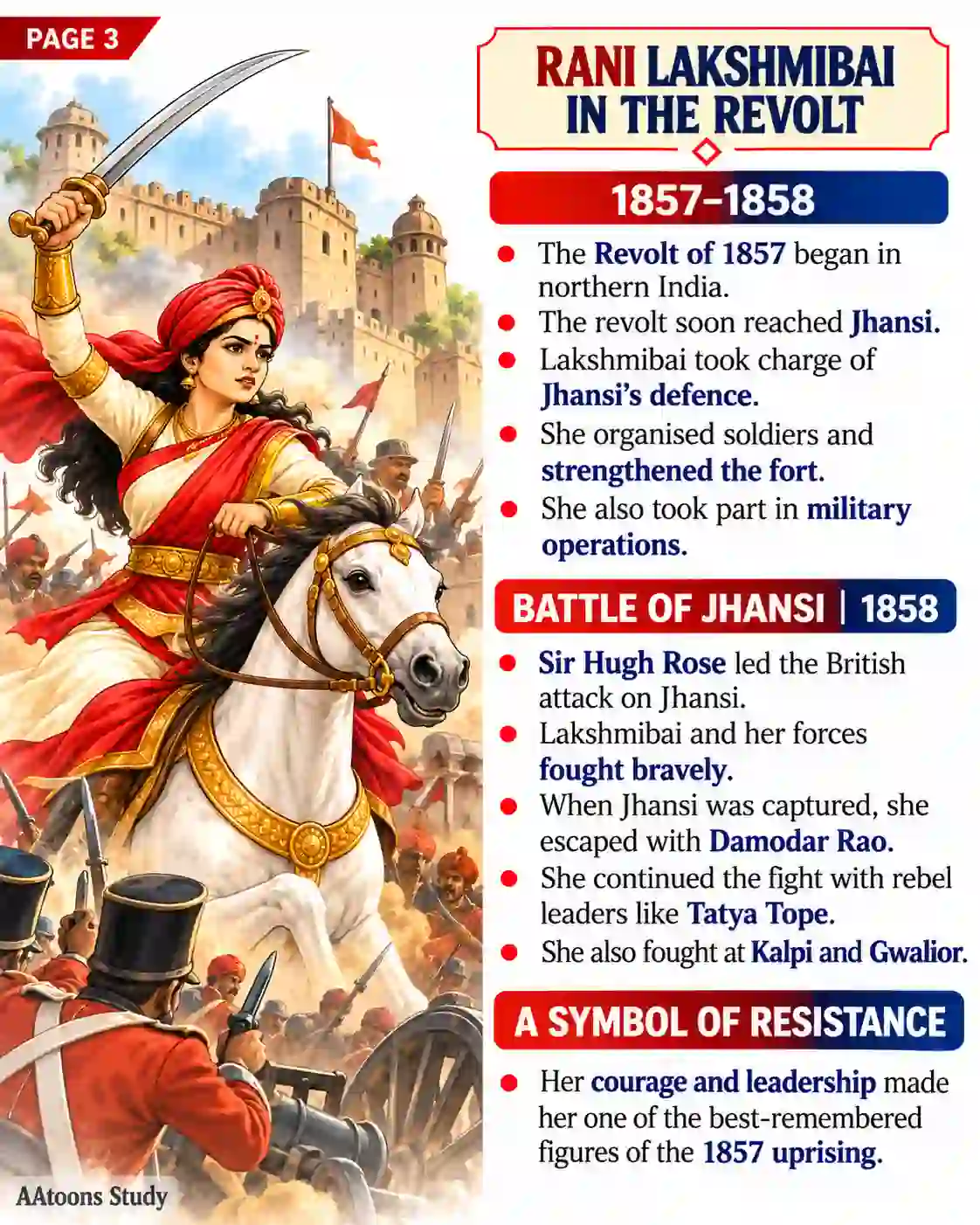
- The Revolt of 1857 began in northern India and soon spread to different areas.
- The conflict eventually reached Jhansi.
- As the situation became dangerous, Rani Lakshmibai took responsibility for the defence of Jhansi.
PREPARING FOR DEFENCE
- Lakshmibai organised soldiers to protect the city.
- She strengthened the Jhansi Fort and prepared it for battle.
- She also took an active part in military operations.
- Her efforts helped organise the defence of Jhansi against the British.
THE BRITISH ATTACK
- In 1858, British forces attacked Jhansi.
- The British forces were led by Sir Hugh Rose.
- Lakshmibai and her soldiers fought fiercely to defend the city.
- Despite their efforts, Jhansi was captured by the British.
CONTINUING THE FIGHT
- After Jhansi was captured, Lakshmibai escaped with her adopted son, Damodar Rao.
- She did not give up the struggle against the British.
- She continued fighting alongside other rebel leaders, including Tatya Tope.
- She later took part in battles around Kalpi and Gwalior.
A SYMBOL OF RESISTANCE
- Her courage and leadership during the revolt made her one of the most remembered figures of the 1857 uprising.
- She became widely remembered for her bravery, determination and leadership.
FINAL BATTLE & LEGACY (1858)
THE BATTLE OF GWALIOR
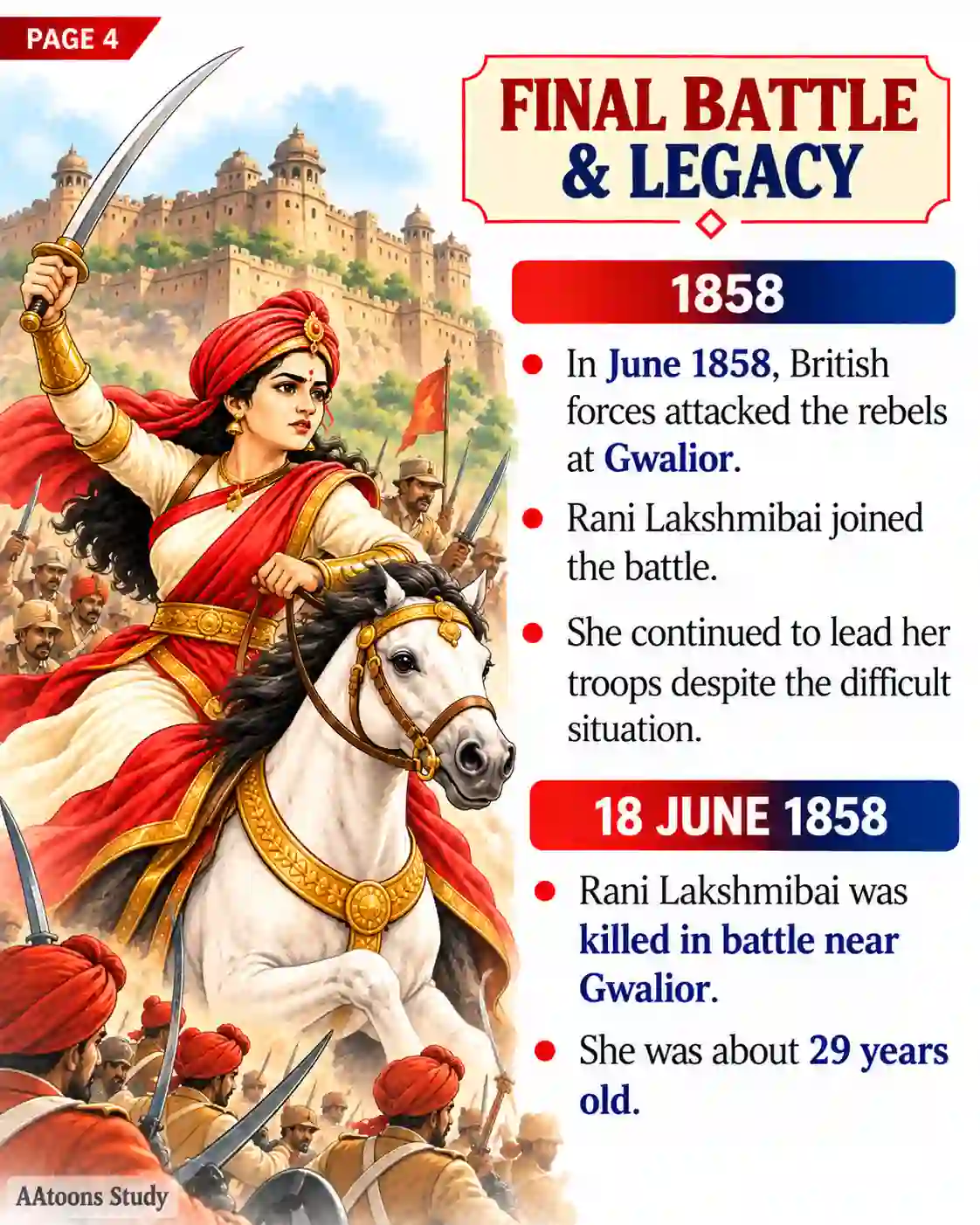
- In June 1858, British forces moved against the rebels at Gwalior.
- Rani Lakshmibai joined the fighting at Gwalior.
- She continued to lead her troops in battle.
- Even in difficult circumstances, she continued her resistance against the British forces.
18 JUNE 1858
- On 18 June 1858, Rani Lakshmibai was killed in battle near Gwalior.
- She was about 29 years old at the time of her death.
- She became remembered as a courageous queen who fought against British rule during the Revolt of 1857.
You must be logged in to add a comment.
Login to Comment