
Mughal Empire: From Babur to Bahadur Shah Zafar I The Mughal Empire History
1 Comments
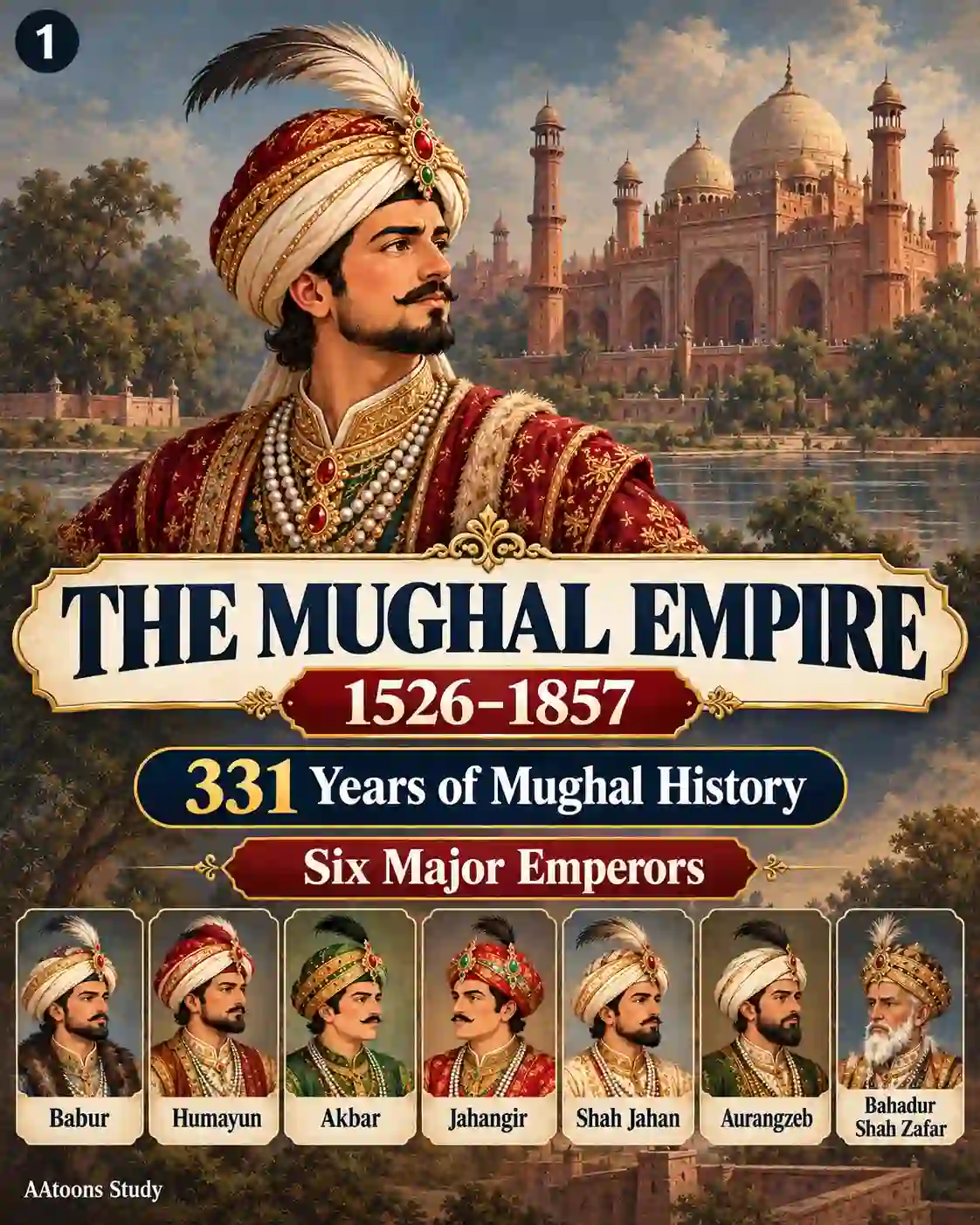
1. THE MUGHAL EMPIRE 1526–1857
The Mughal Empire lasted from 1526 to 1857, covering 331 years of Mughal history. The six major emperors were Babur, Humayun, Akbar, Jahangir, Shah Jahan and Aurangzeb. Bahadur Shah Zafar was the last Mughal emperor.
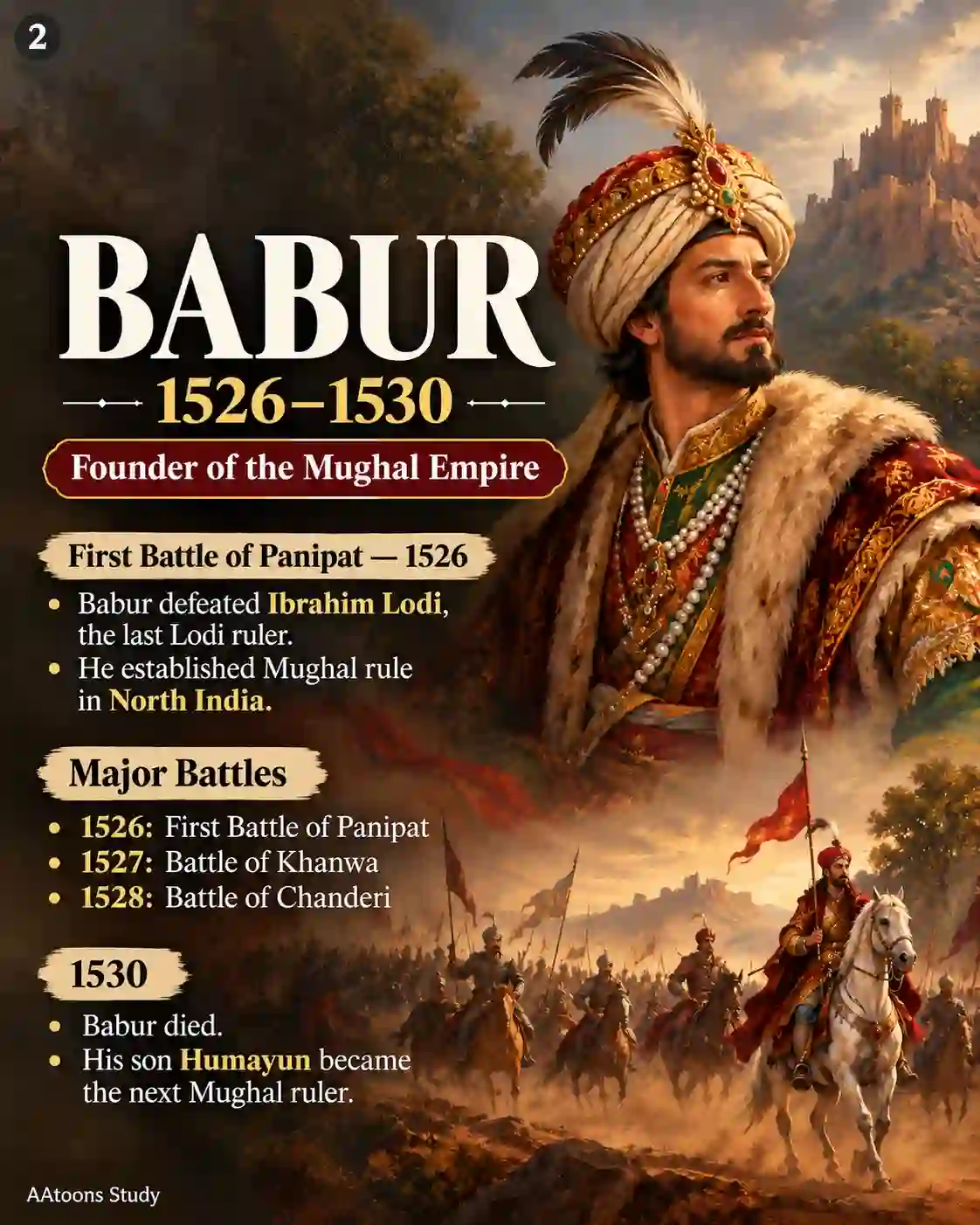
2. BABUR 1526–1530
Babur was the founder of the Mughal Empire. In 1526, he defeated Ibrahim Lodi, the last Lodi ruler, in the First Battle of Panipat and established Mughal rule in North India. He also fought the Battle of Khanwa in 1527 and the Battle of Chanderi in 1528. Babur died in 1530, and his son Humayun became the next Mughal ruler.
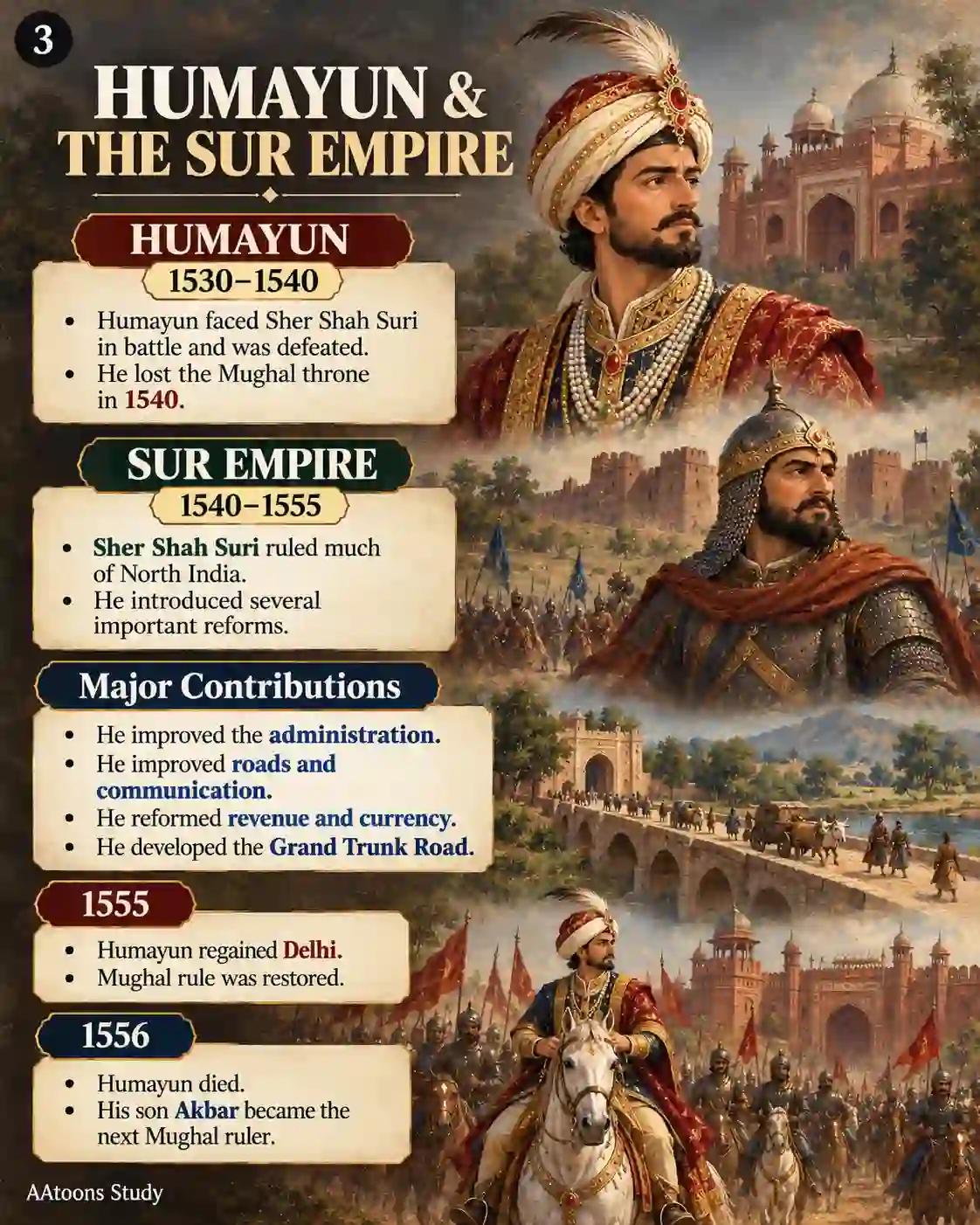
3. HUMAYUN & THE SUR EMPIRE
Humayun ruled from 1530 to 1540. He faced Sher Shah Suri in battle and was defeated. He lost the Mughal throne in 1540. From 1540 to 1555, Sher Shah Suri ruled much of North India and established the Sur Empire. He improved administration, roads and communication, and reformed revenue and currency. He also developed the Grand Trunk Road. In 1555, Humayun regained Delhi and Mughal rule was restored. In 1556, Humayun died, and his son Akbar became the next Mughal ruler.
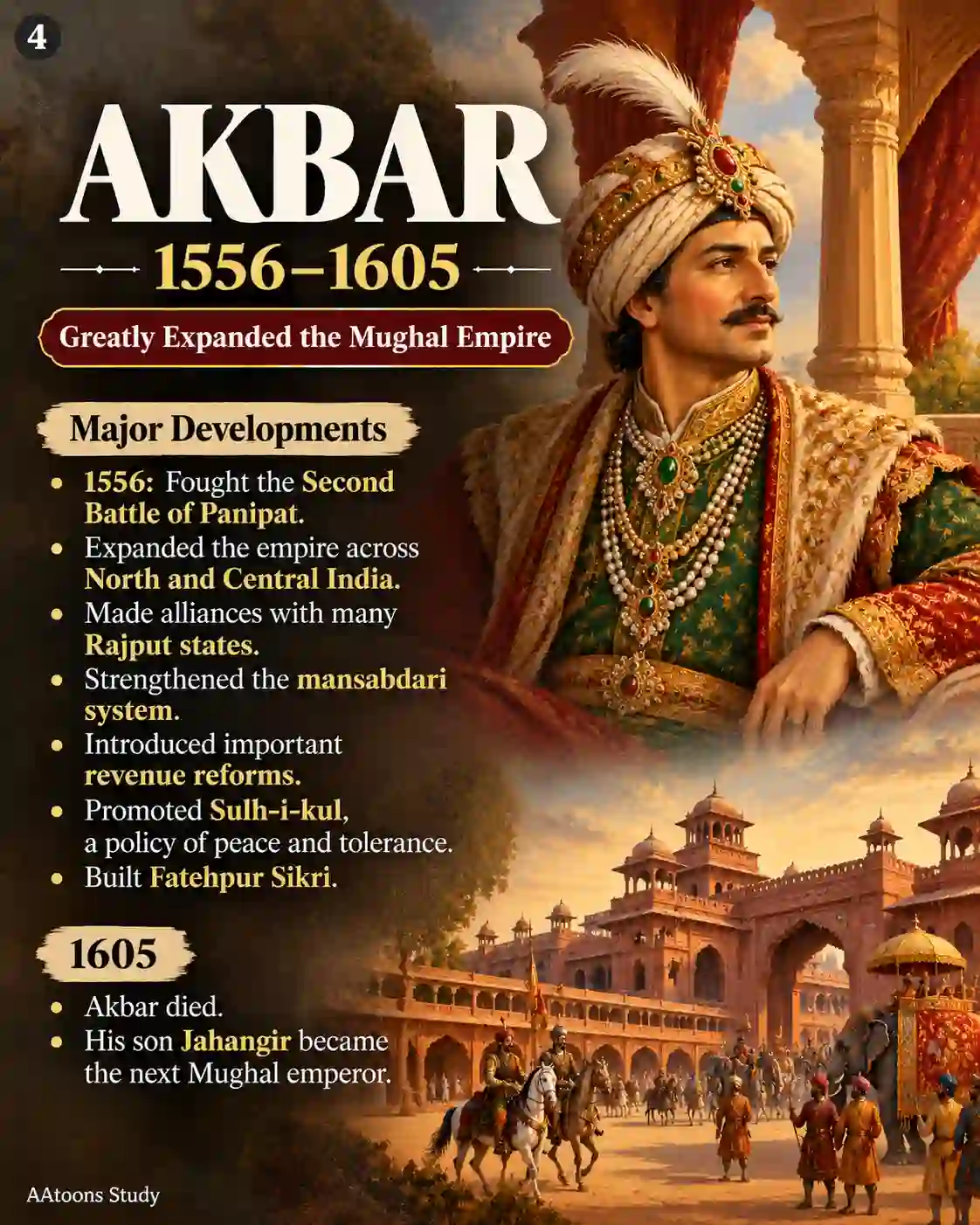
4. AKBAR 1556–1605
Akbar greatly expanded and strengthened the Mughal Empire. In 1556, he fought the Second Battle of Panipat. He expanded the empire across much of North and Central India and made alliances with several Rajput states. He strengthened the mansabdari system, introduced important revenue reforms, and promoted Sulh-i-kul. He also built Fatehpur Sikri. Akbar died in 1605, and his son Jahangir became the next emperor.
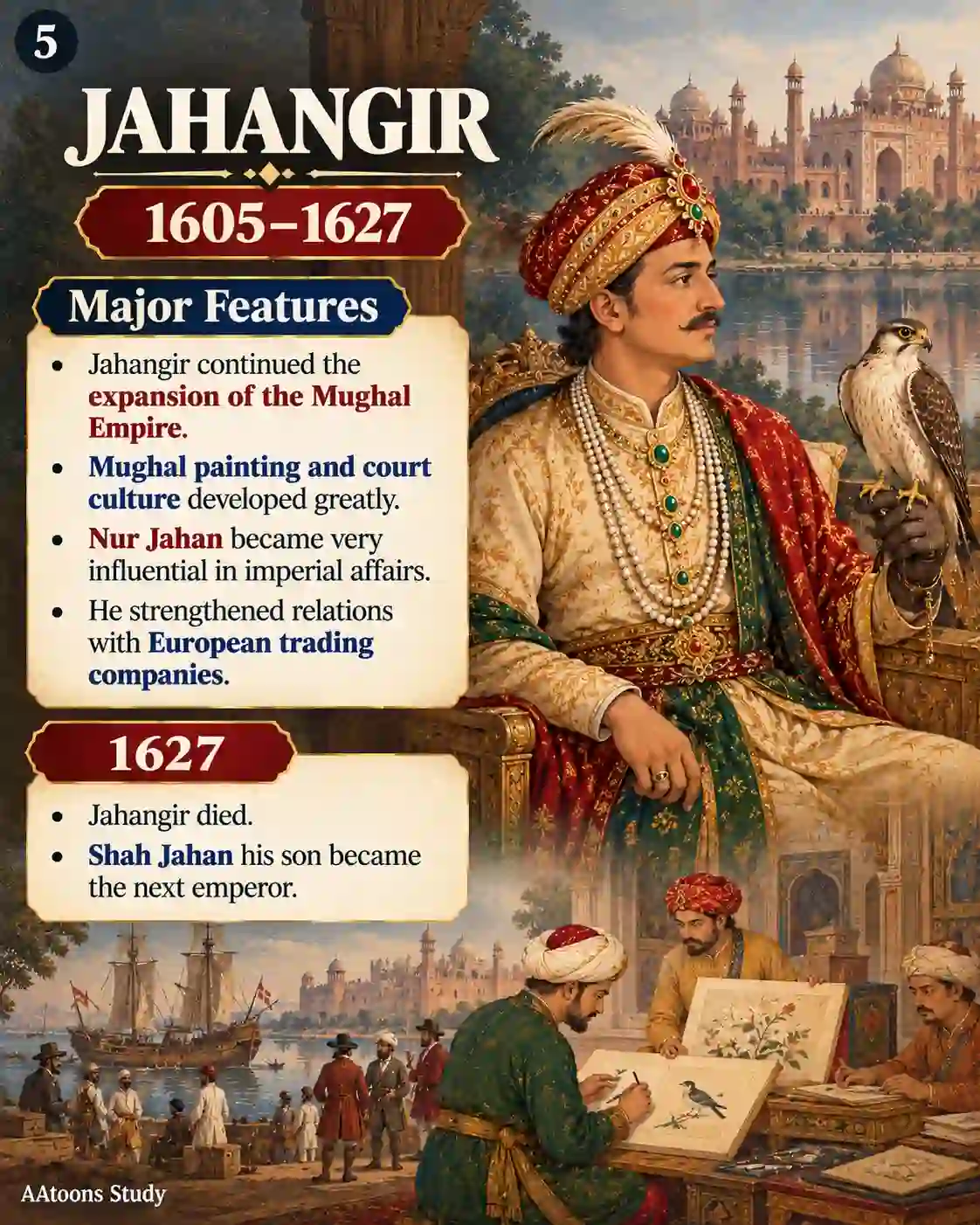
5. JAHANGIR 1605–1627
Jahangir continued the expansion of the Mughal Empire. During his reign, Mughal painting and court culture developed greatly. Nur Jahan became very influential in imperial affairs. Jahangir also strengthened relations with European trading companies. He died in 1627, and his son Shah Jahan became the next emperor.
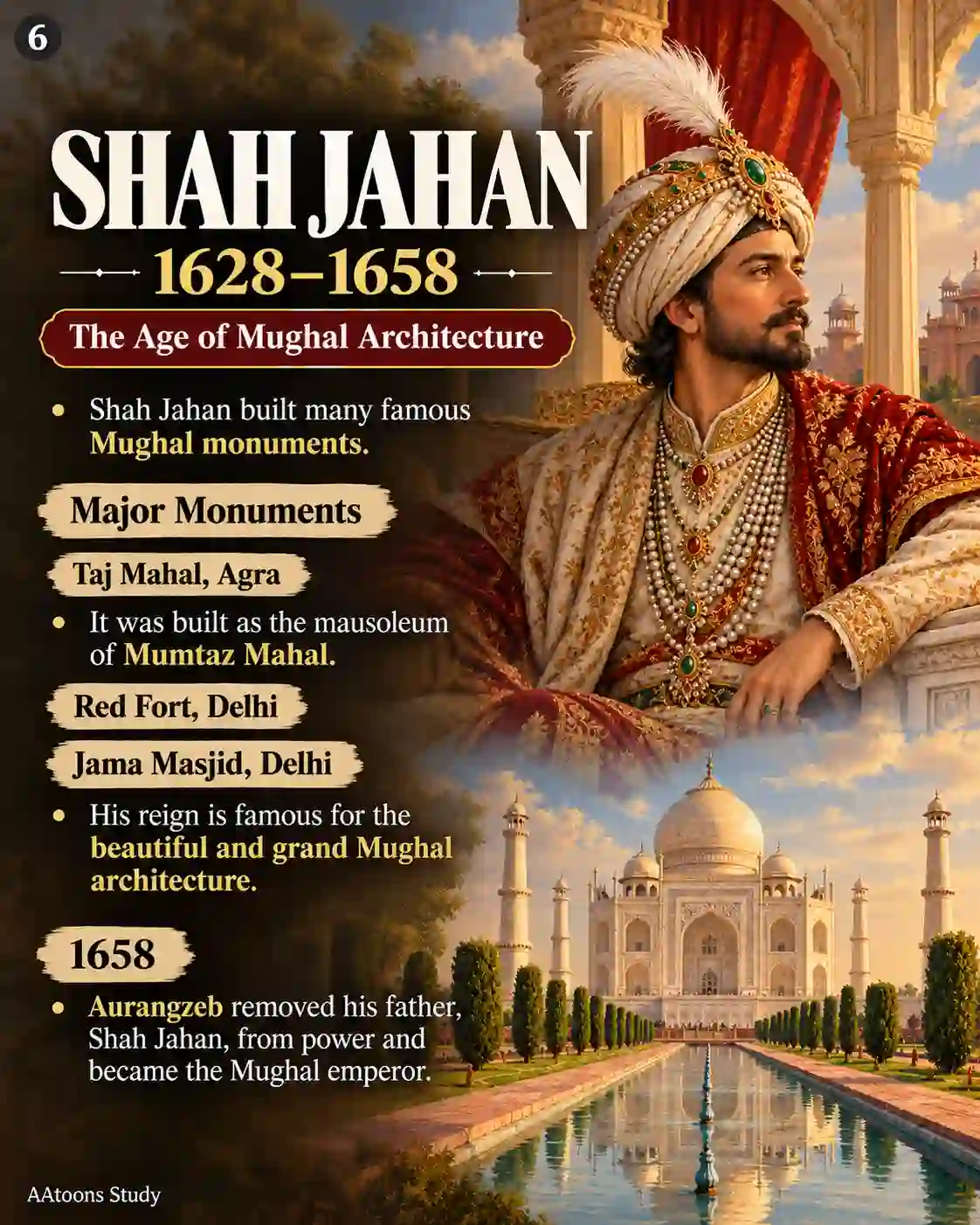
6. SHAH JAHAN 1628–1658
The reign of Shah Jahan is known as the Age of Mughal Architecture. He built many famous Mughal monuments, including the Taj Mahal in Agra, built as the mausoleum of Mumtaz Mahal, the Red Fort in Delhi, and Jama Masjid in Delhi. His reign is famous for beautiful and grand Mughal architecture. In 1658, Aurangzeb removed his father, Shah Jahan, from power and became the Mughal emperor.
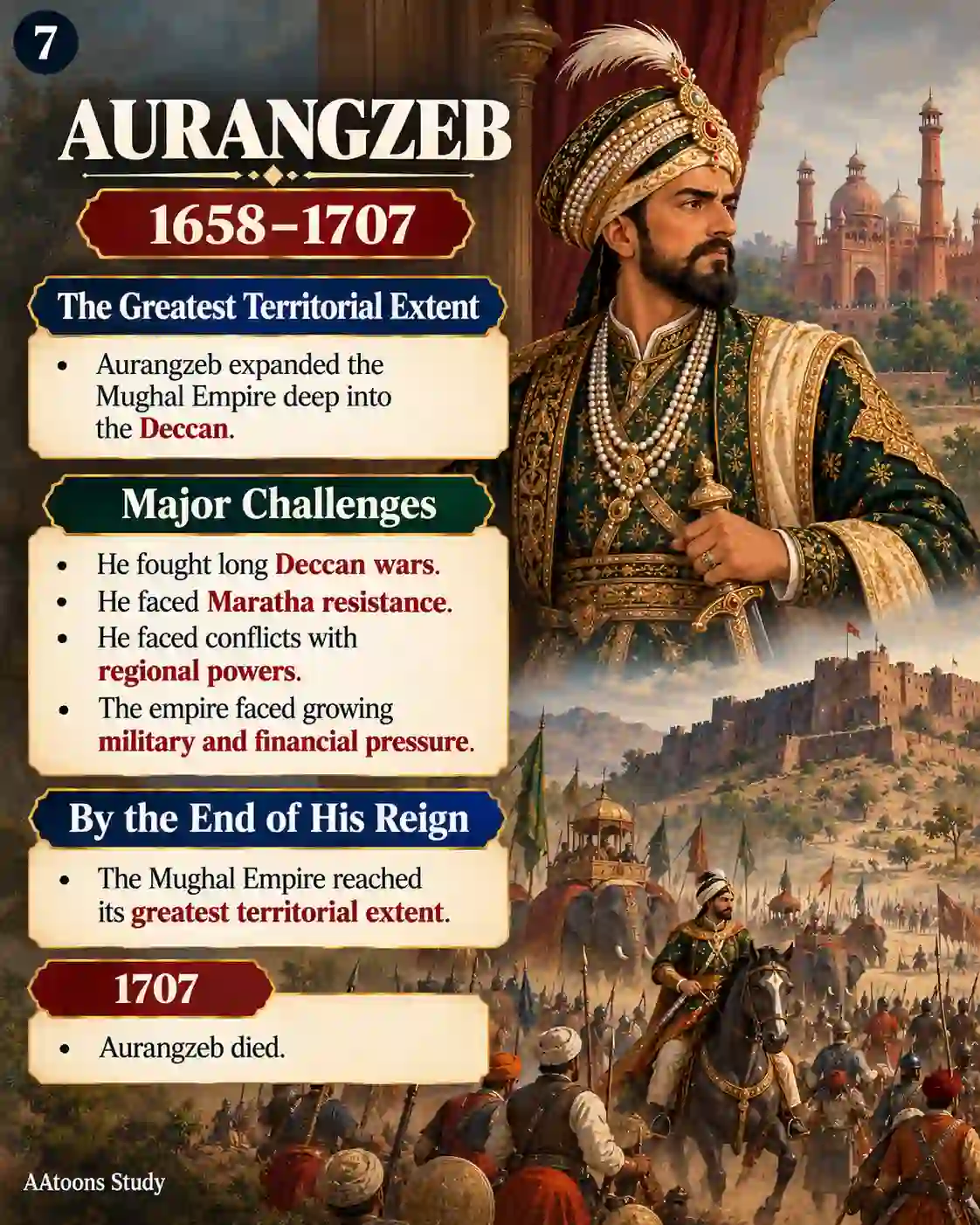
7. AURANGZEB 1658–1707
Aurangzeb expanded the Mughal Empire deep into the Deccan. He fought long Deccan wars and faced Maratha resistance and conflicts with regional powers. The empire also faced growing military and financial pressure. By the end of his reign, the Mughal Empire reached its greatest territorial extent. Aurangzeb died in 1707.
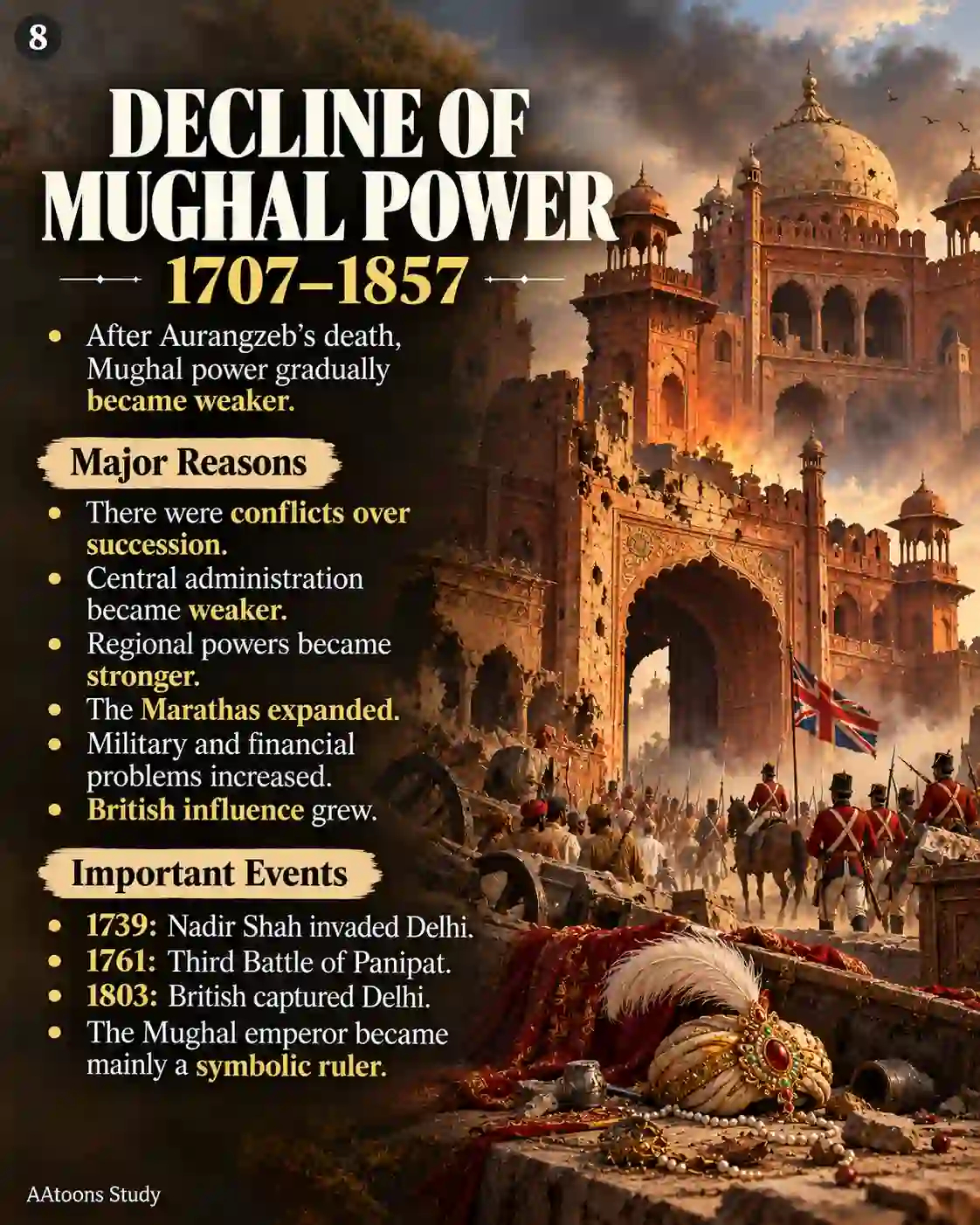
8. DECLINE OF MUGHAL POWER 1707–1857
After Aurangzeb's death, Mughal power gradually became weaker. There were conflicts over succession, central administration became weaker, regional powers became stronger, the Marathas expanded, military and financial problems increased, and British influence grew. In 1739, Nadir Shah invaded Delhi. In 1761, the Third Battle of Panipat took place. In 1803, the British captured Delhi. The Mughal emperor became mainly a symbolic ruler.
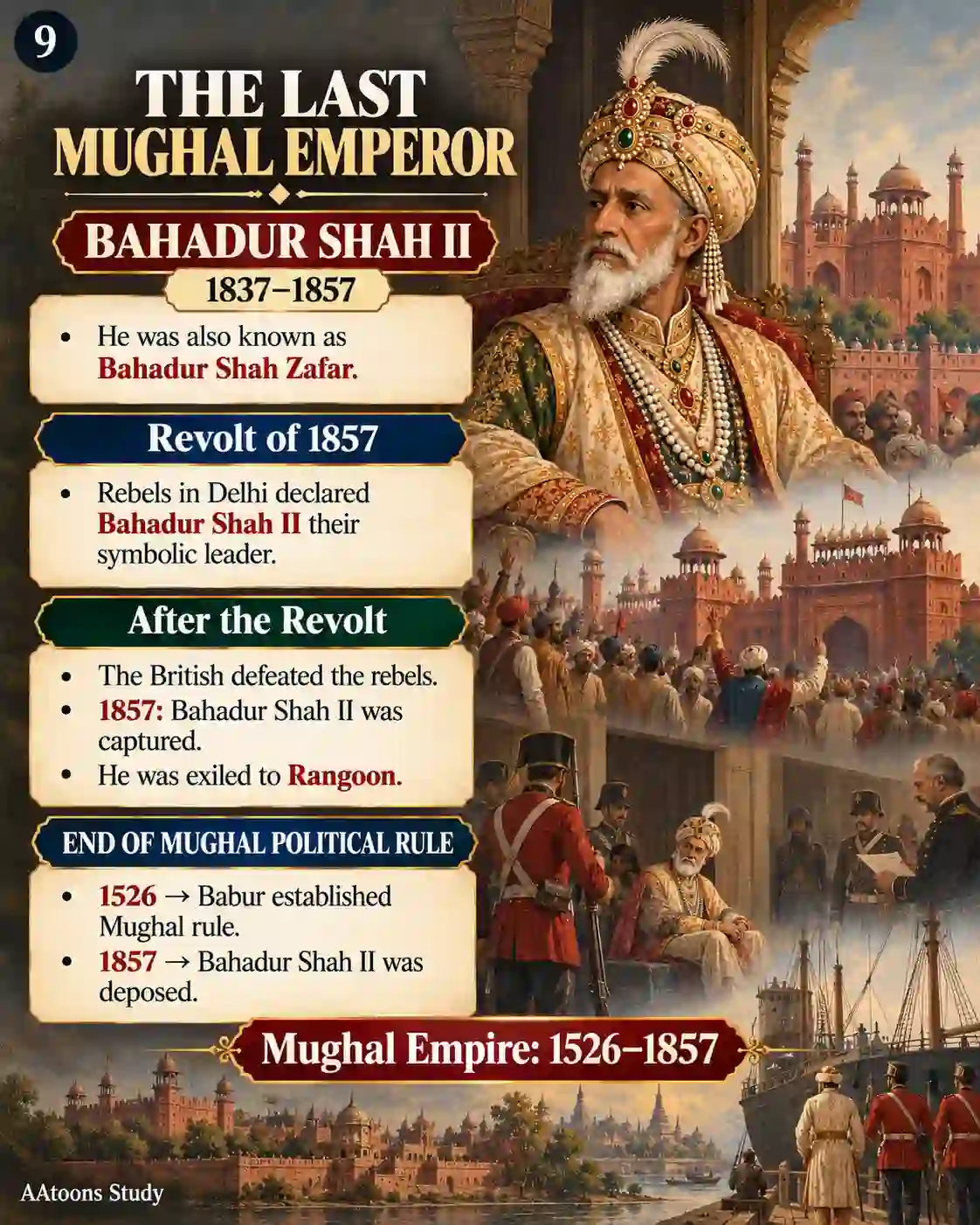
9. THE LAST MUGHAL EMPEROR: BAHADUR SHAH II
Bahadur Shah II, also known as Bahadur Shah Zafar, ruled from 1837 to 1857. During the Revolt of 1857, rebels in Delhi declared Bahadur Shah II their symbolic leader. The British defeated the rebels. In 1857, Bahadur Shah II was captured and exiled to Rangoon.
You must be logged in to add a comment.
Login to Comment