
World War 1 Explained | Causes, Events & Consequences | History for Students
1 Comments
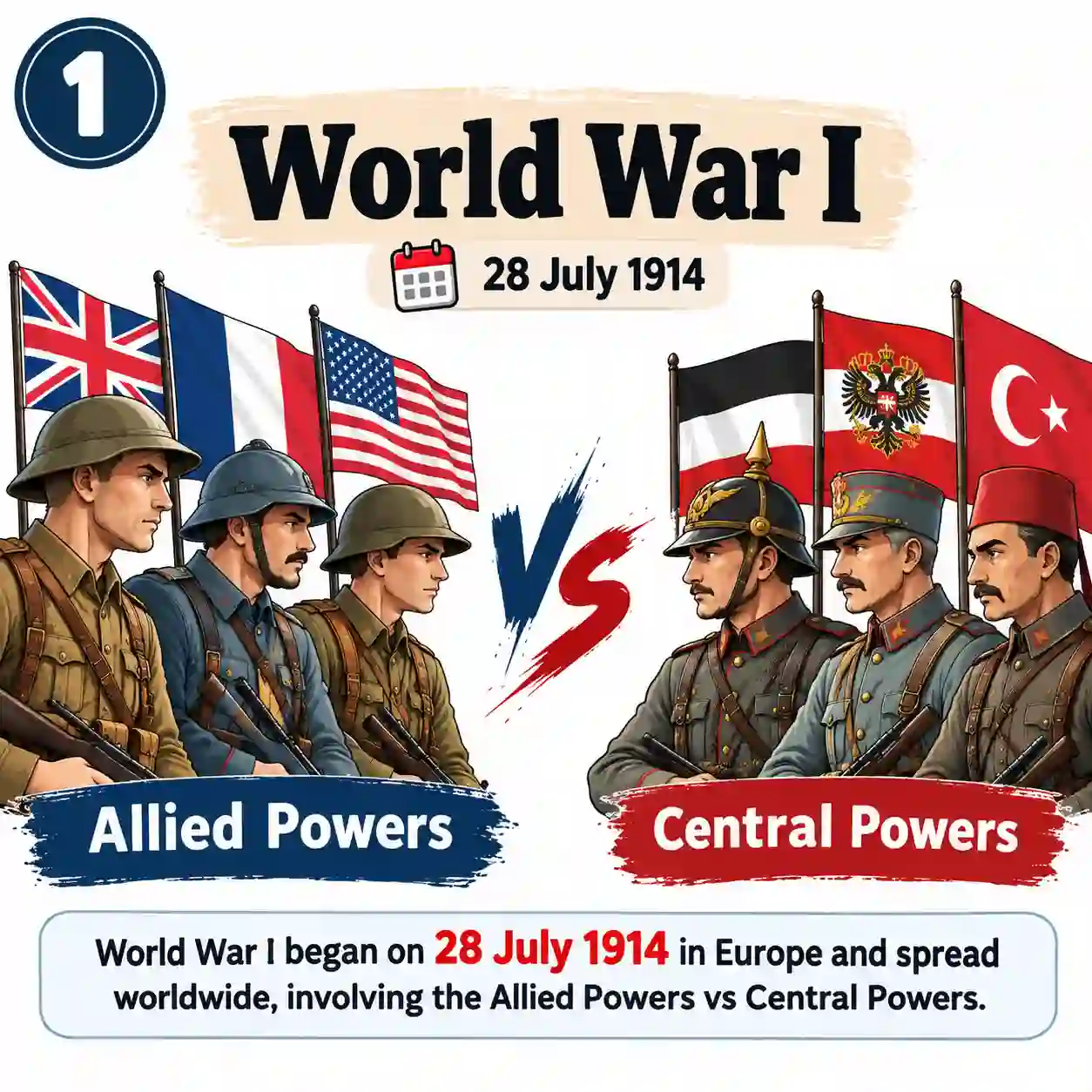
World War I began on 28 July 1914 and was a major global war fought mainly between two groups of countries: the Allied Powers and the Central Powers. The war began in Europe and spread to other parts of the world.
The Immediate Cause: Assassination of Franz Ferdinand
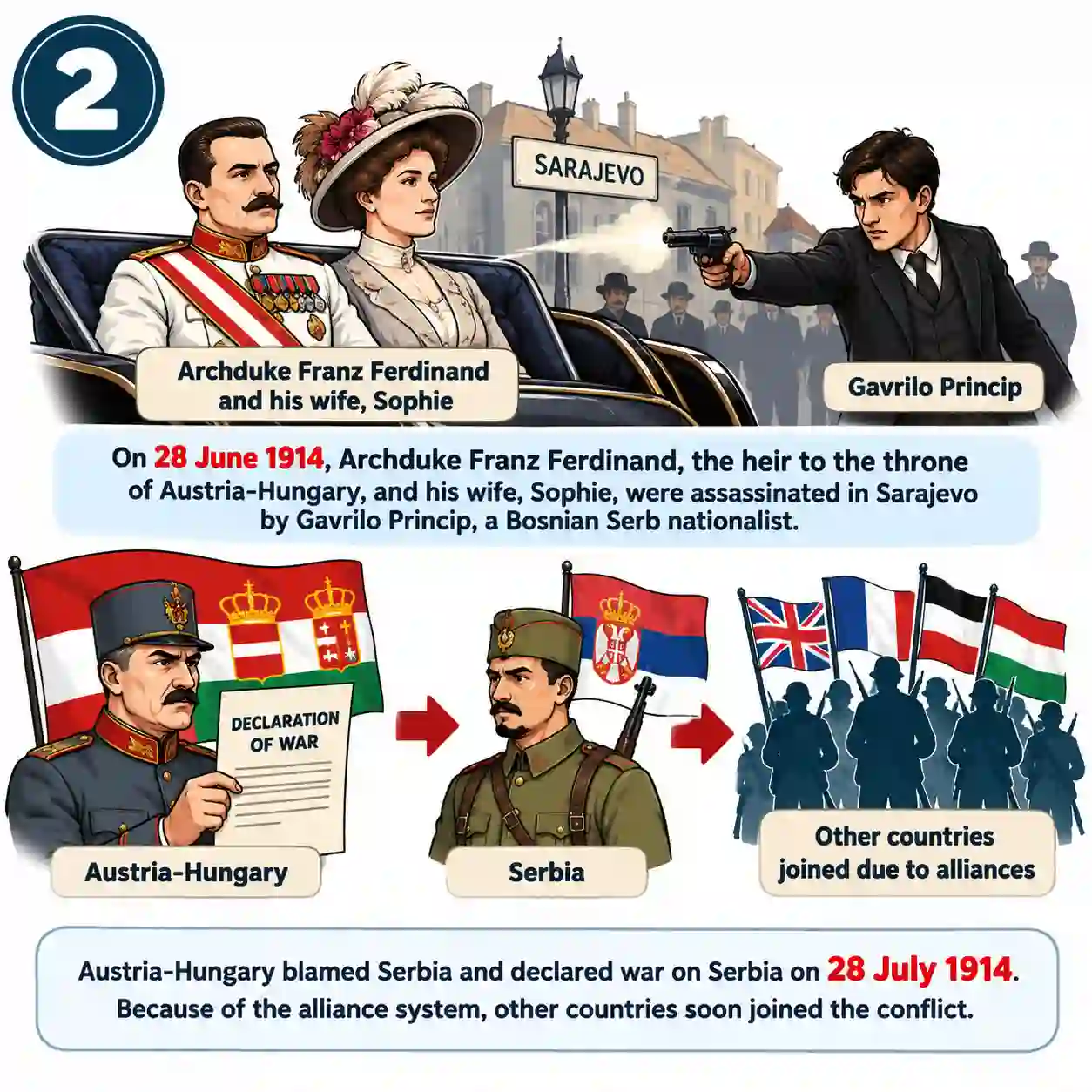
On 28 June 1914, Archduke Franz Ferdinand, the heir to the throne of Austria-Hungary, and his wife, Sophie, were assassinated in Sarajevo by Gavrilo Princip, a Bosnian Serb nationalist. Austria-Hungary blamed Serbia and declared war on Serbia on 28 July 1914. Because of the alliance system, other countries soon joined the conflict.
War Begins
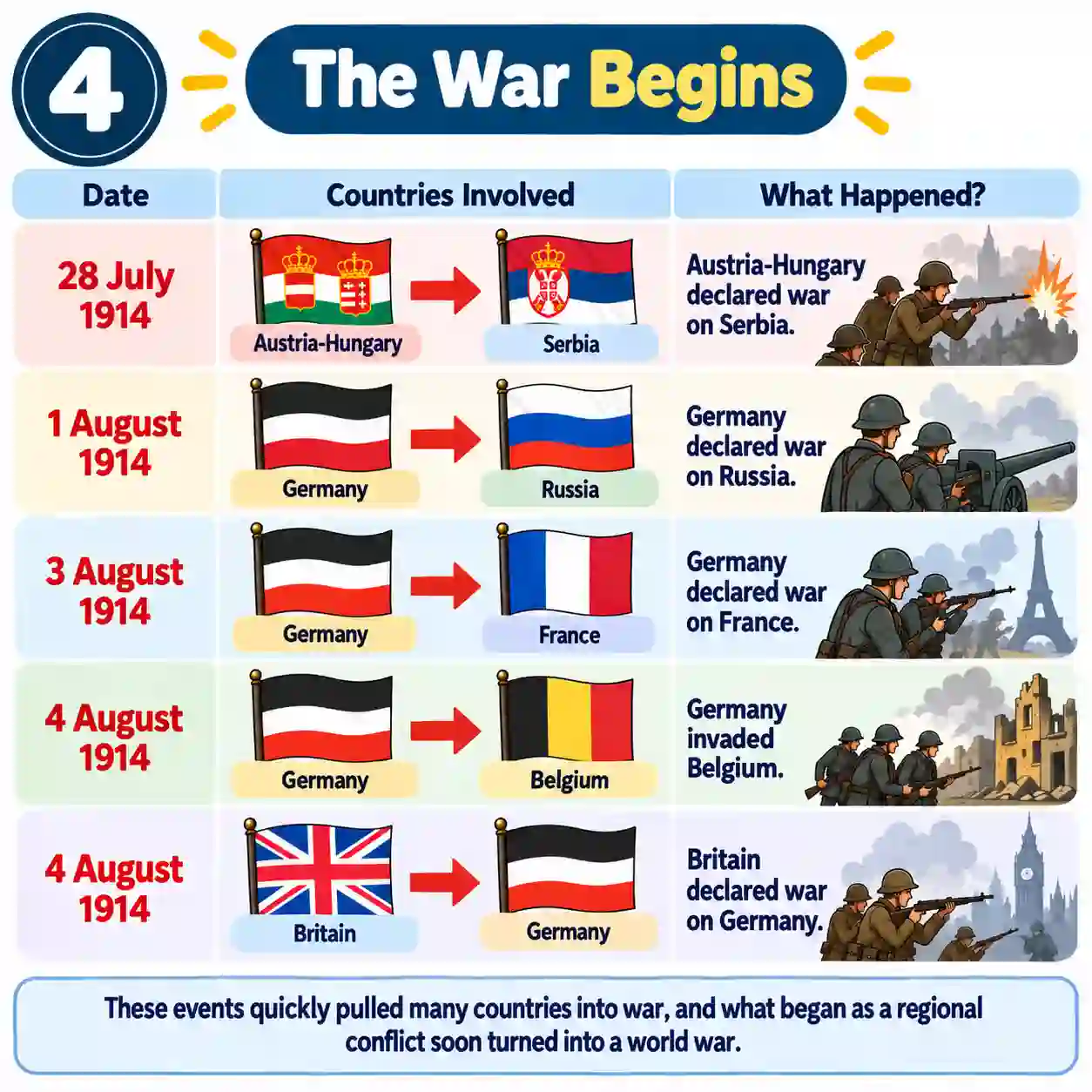
On 28 July 1914, Austria-Hungary declared war on Serbia. Russia supported Serbia. Germany then declared war on Russia and France. Germany invaded neutral Belgium to reach France. On 4 August 1914, Britain entered the war. A conflict between two countries had become a much larger war.
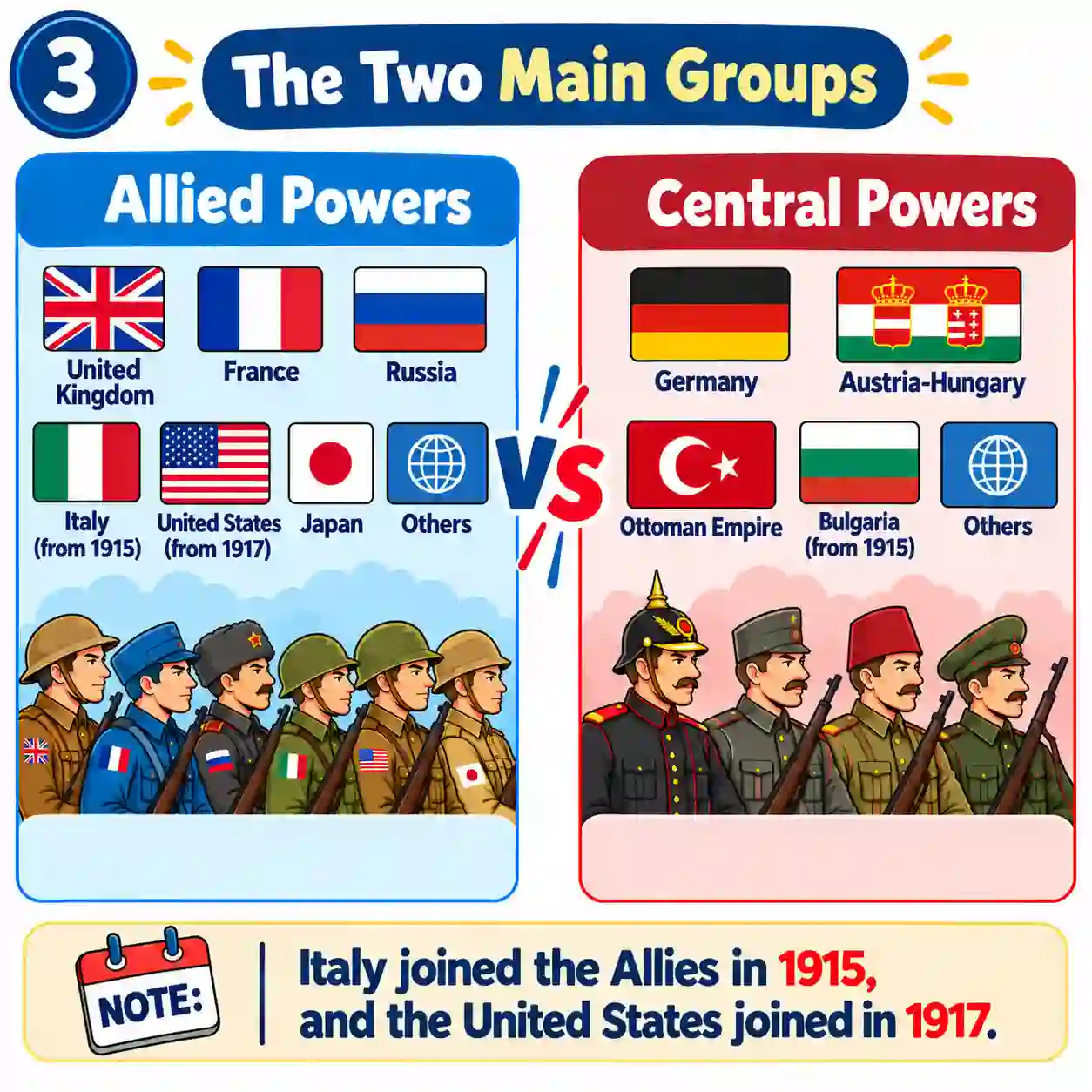
The Two Main Groups
Allied Powers - Britain, France, Russia, Serbia, Japan, Italy, and the United States.
Central Powers - Germany, Austria-Hungary, the Ottoman Empire, and Bulgaria.
Note: Italy joined the Allies in 1915, and the United States joined in 1917.
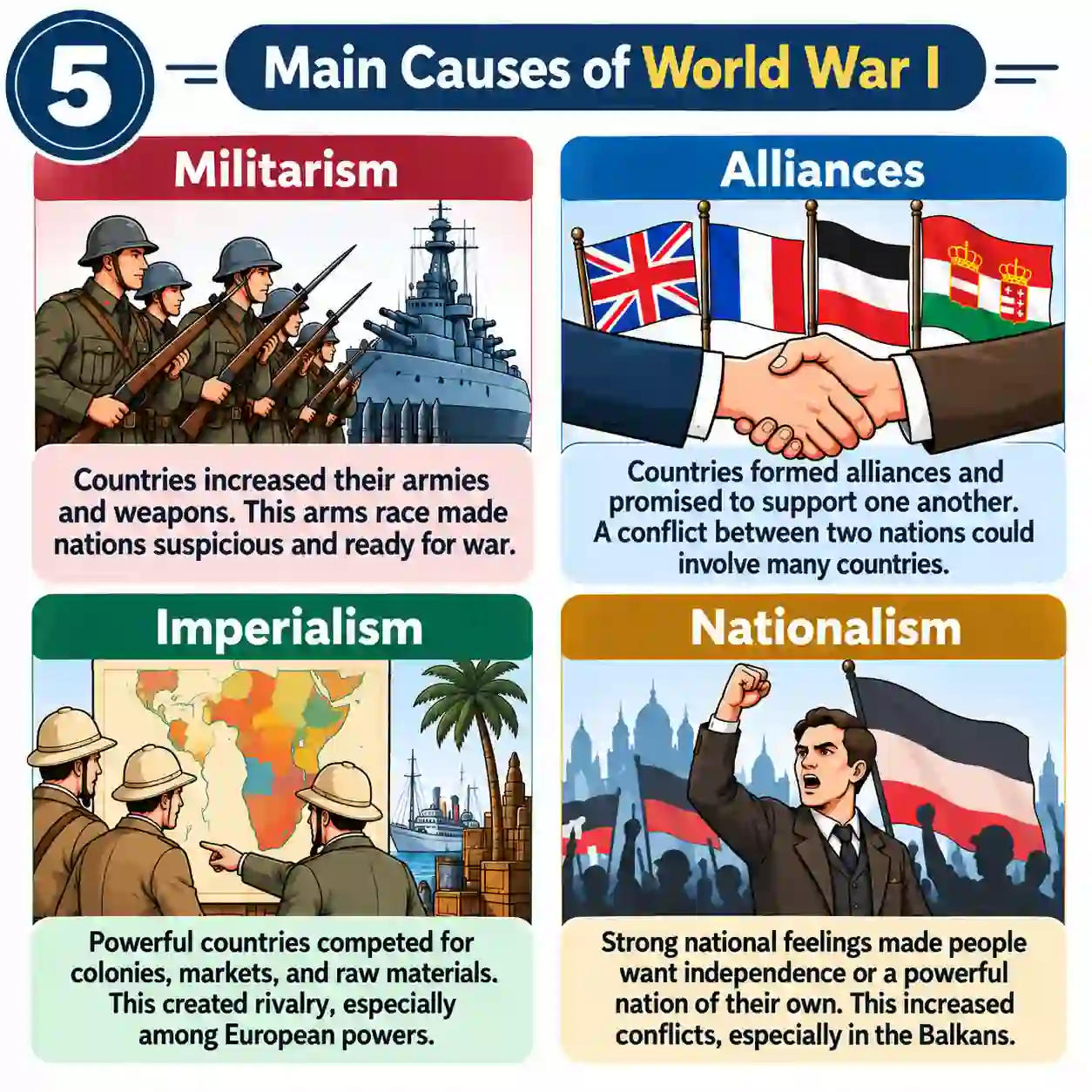
Main Causes of World War I
🔹 Militarism: Countries built bigger armies, stronger navies, and more weapons, increasing fear and competition.
🔹 Alliances: Countries made agreements to help and protect one another, so a conflict could involve many other nations.
🔹 Imperialism: Powerful countries competed for colonies, land, and resources, increasing rivalry.
🔹 Nationalism: Strong pride in one's country or ethnic group created tension, especially in the Balkans.
How the War Spread?
The war spread quickly after Austria-Hungary attacked Serbia. Russia supported Serbia and prepared for war. Germany declared war on Russia on 1 August 1914 and on France on 3 August 1914. Germany invaded Belgium to attack France. Britain entered the war on 4 August 1914. The European conflict soon became a global war.
1914: War Begins - Germany invaded Belgium to attack France but was stopped at the First Battle of the Marne. After this, both sides began digging trenches. Trench warfare became a major feature of the war, especially on the Western Front.
1915: New Fronts - Italy joined the Allied Powers in 1915. The Allies launched the Gallipoli Campaign against the Ottoman Empire. However, the campaign failed, and Allied forces eventually withdrew.
1916: Fierce Battles - The Battles of Verdun and the Somme caused enormous loss of life and many injuries. In 1916, British forces used tanks in battle for the first time, introducing a new weapon of warfare.
1917: A Turning Point - The United States joined the war on 6 April 1917, supporting the Allied Powers. The Russian Revolution took place, weakening Russia's war effort. Russia later signed a separate peace treaty and left the war in 1918.
1918: The War Ends - Germany's final attacks failed. The Allies launched successful counterattacks, while the Central Powers became weaker. On 11 November 1918, Germany signed an armistice, which stopped the fighting. The fighting had ended, but the peace settlement was still to come.
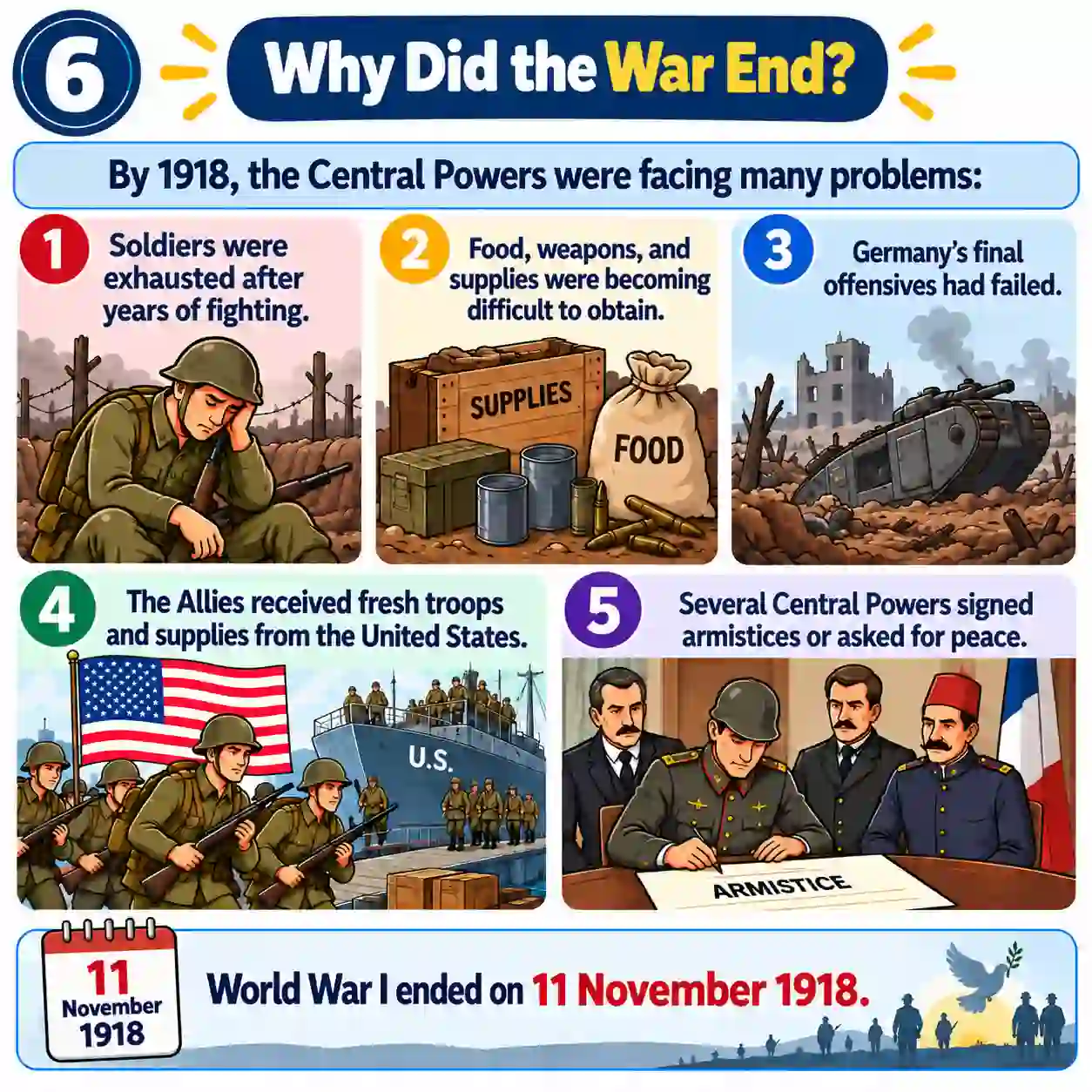
Why Did the War End?
By 1918, the Central Powers were facing many problems:
🔹 Soldiers were exhausted after years of fighting.
🔹 Food, weapons, and supplies were becoming difficult to obtain.
🔹 Germany's final offensives had failed.
🔹 The Allies received fresh troops and supplies from the United States.
🔹 Several Central Powers signed armistices or asked for peace.
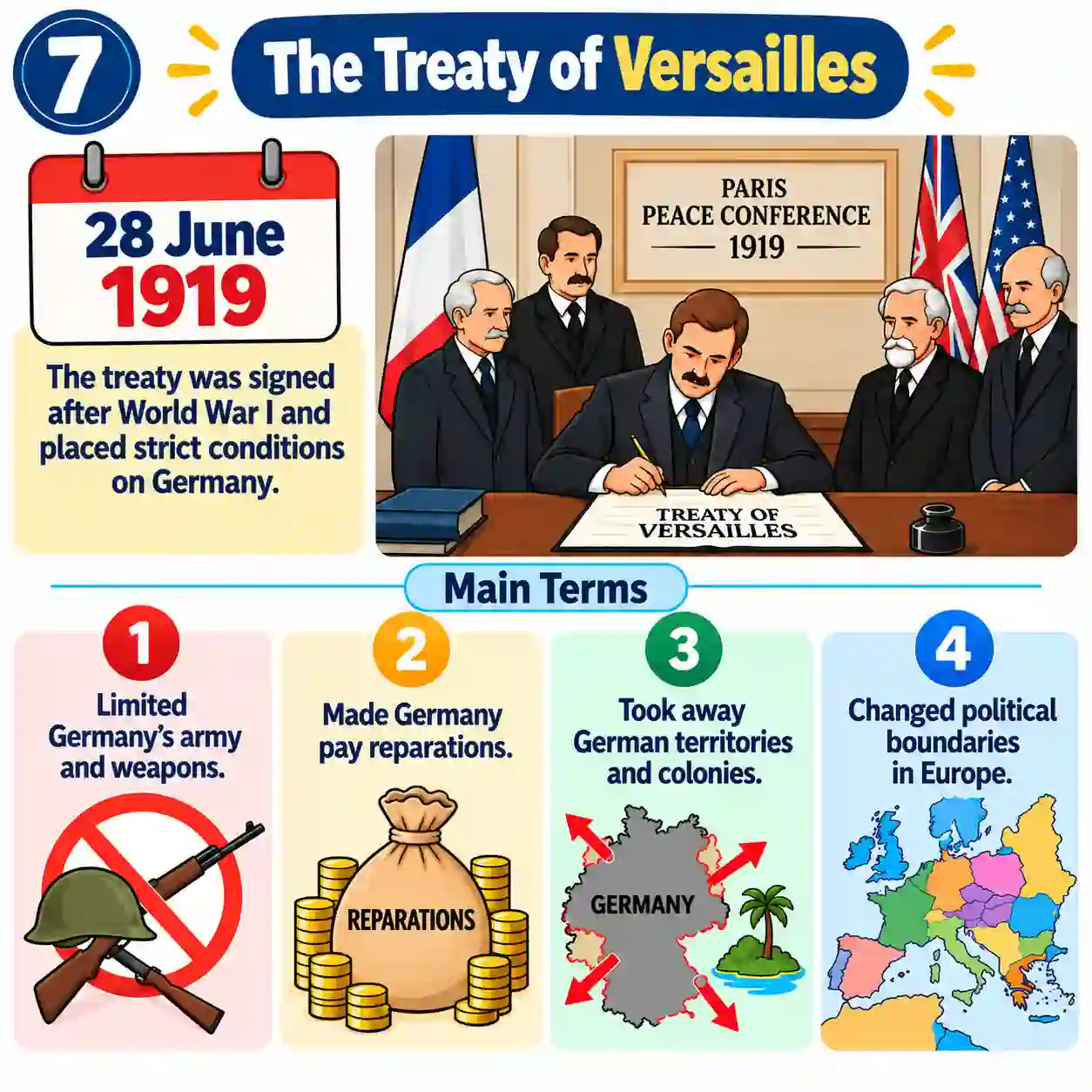
The Treaty of Versailles - 28 June 1919
The Treaty of Versailles was signed after the war at the Paris Peace Conference.
🔹 Limited Germany's army and weapons.
🔹 Required Germany to pay reparations.
🔹 Took away German territory and overseas colonies.
🔹 Imposed strict conditions on Germany.
🔹 Created new political arrangements in Europe.
You must be logged in to add a comment.
Login to Comment