
Cold War 1947–1991 | Causes, Major Events and End Explained
1 Comments
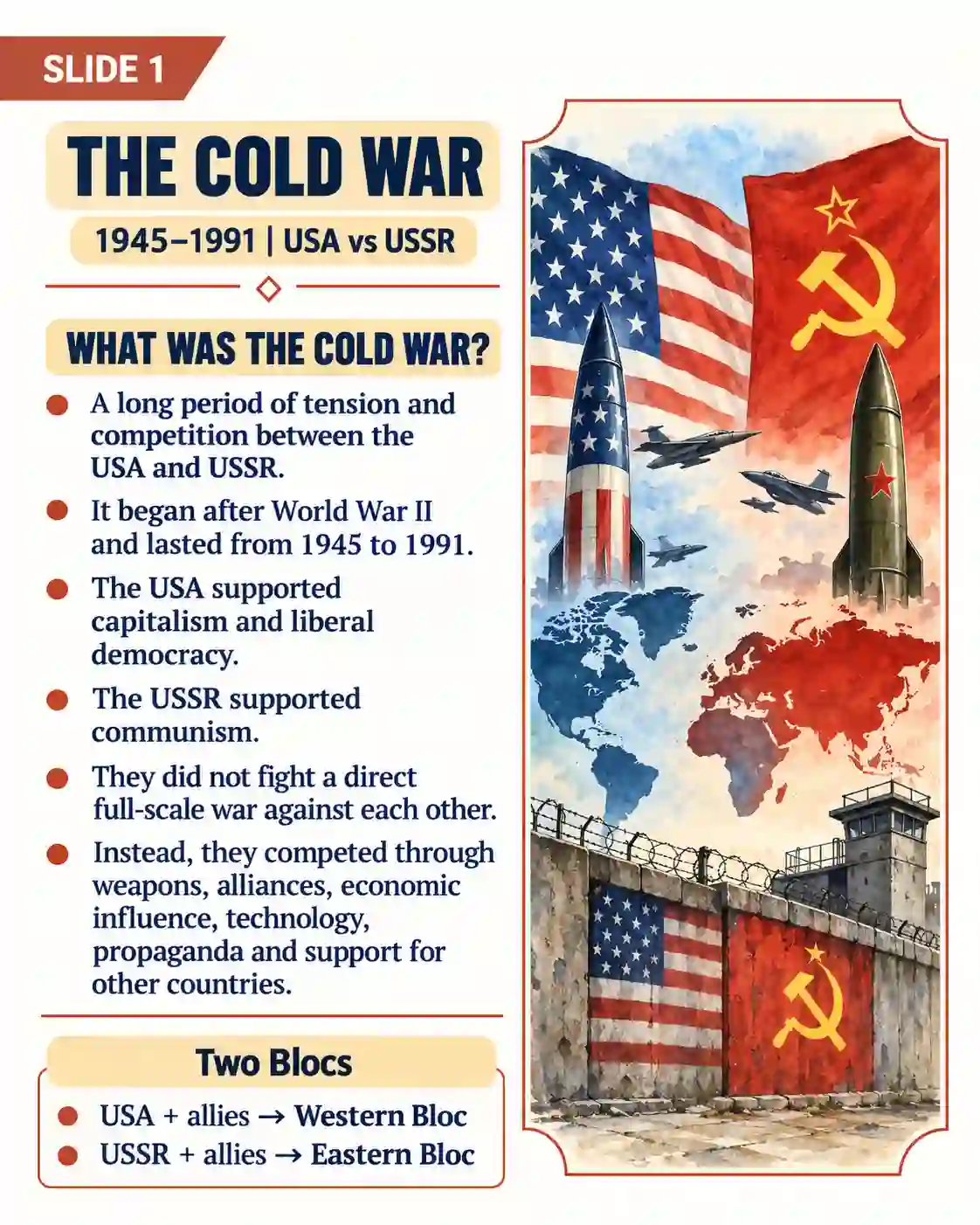
1945–1991 | USA vs USSR
WHAT WAS THE COLD WAR?
Cold War
- A long period of tension and competition between the USA and USSR.
- It began after World War II and lasted from 1945 to 1991.
- The USA supported capitalism and liberal democracy.
- The USSR supported communism.
- They did not fight a direct full-scale war against each other.
- Instead, they competed through weapons, alliances, economic influence, technology, propaganda and support for other countries.
Two Blocs
USA + allies → Western Bloc
USSR + allies → Eastern Bloc
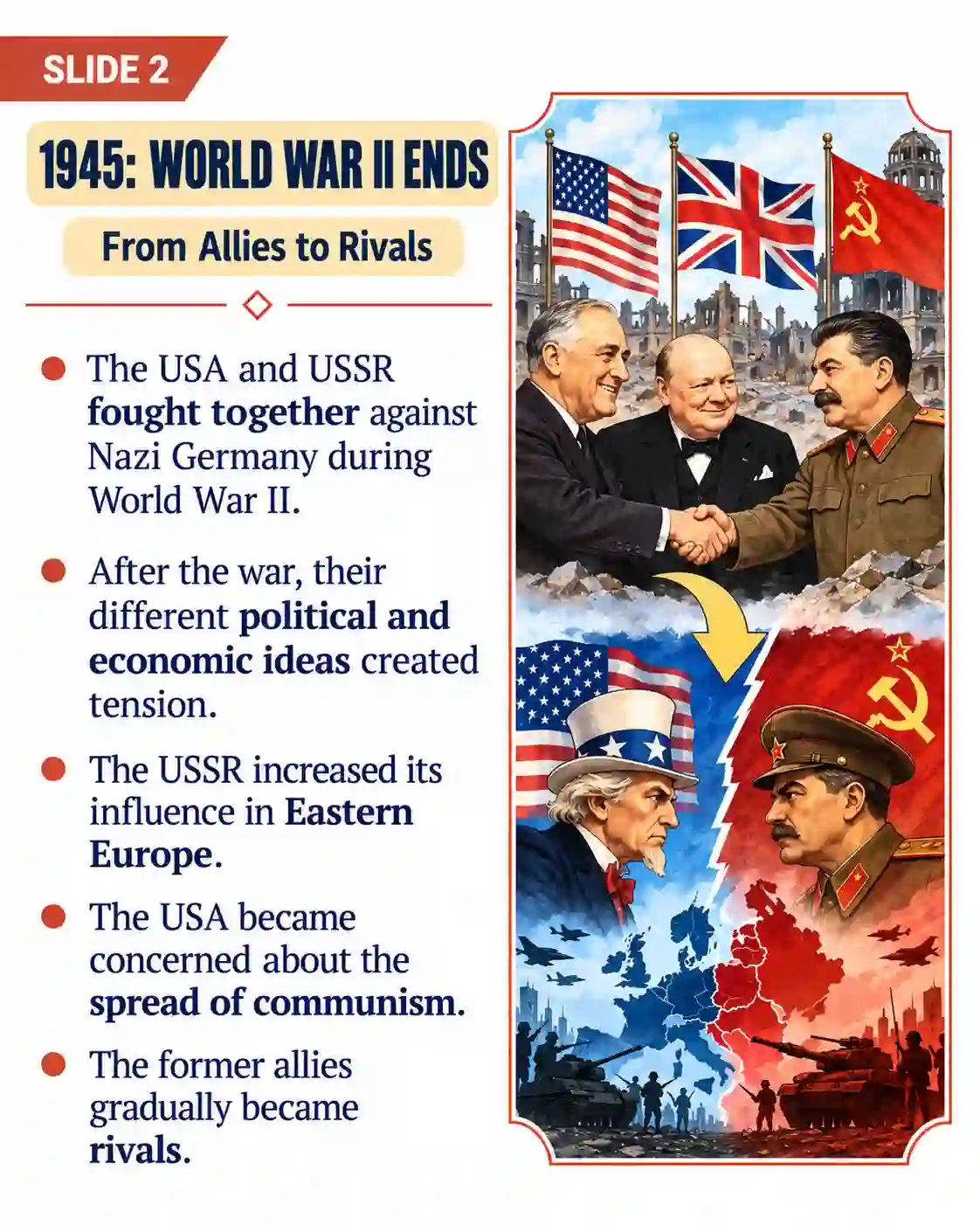
1945: WORLD WAR II ENDS
From Allies to Rivals
- The USA and USSR fought together against Nazi Germany during World War II.
- After the war, their different political and economic ideas created tension.
- The USSR increased its influence in Eastern Europe.
- The USA became concerned about the spread of communism.
- The former allies gradually became rivals.
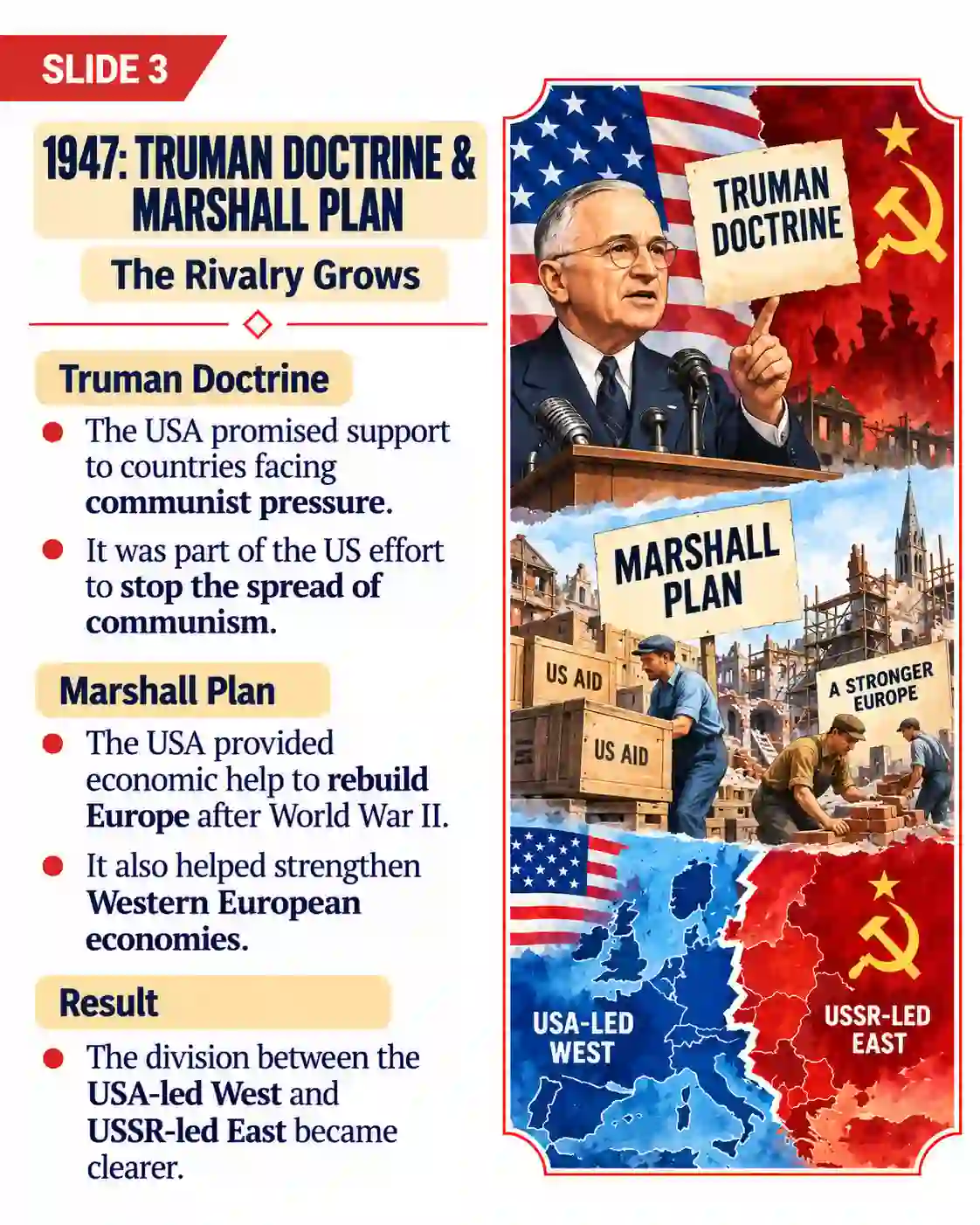
1947: TRUMAN DOCTRINE & MARSHALL PLAN
The Rivalry Grows
Truman Doctrine
- The USA promised support to countries facing communist pressure.
- It was part of the US effort to stop the spread of communism.
Marshall Plan
- The USA provided economic help to rebuild Europe after World War II.
- It also helped strengthen Western European economies.
Result
- The division between the USA-led West and USSR-led East became clearer.
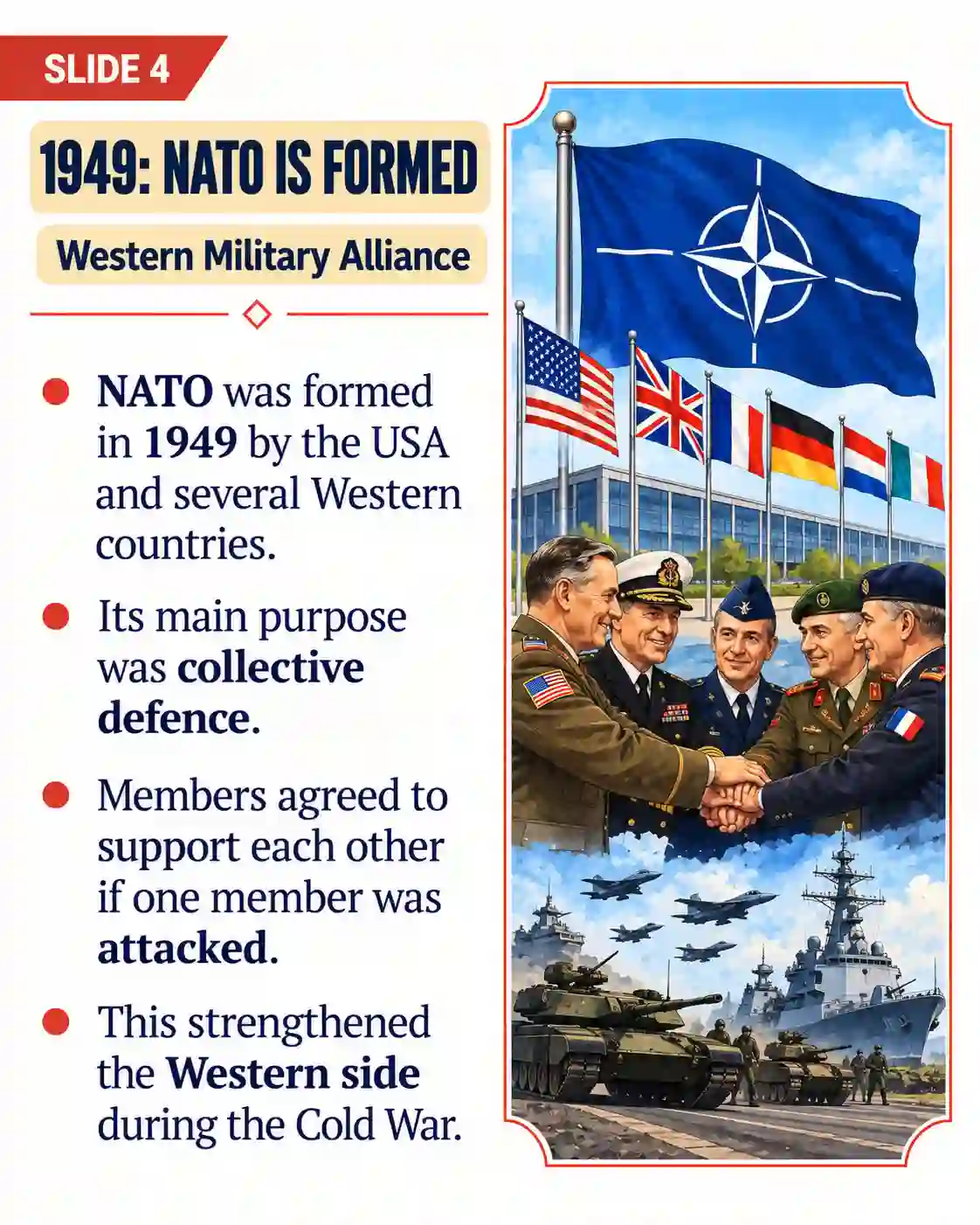
1949: NATO IS FORMED
Western Military Alliance
- NATO was formed in 1949 by the USA and several Western countries.
- Its main purpose was collective defence.
- Members agreed to support each other if one member was attacked.
- This strengthened the Western side during the Cold War.
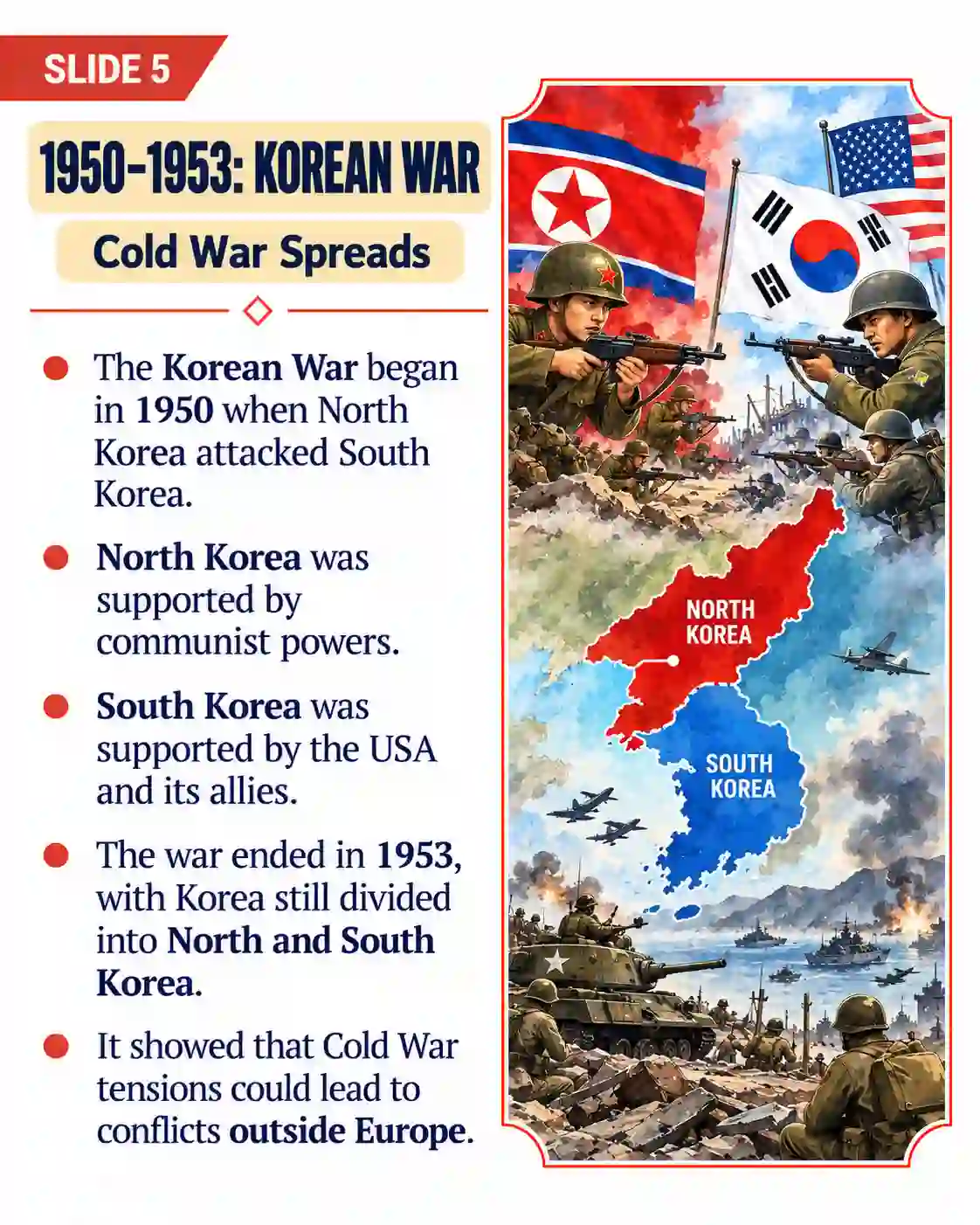
1950–1953: KOREAN WAR
Cold War Spreads
- The Korean War began in 1950 when North Korea attacked South Korea.
- North Korea was supported by communist powers.
- South Korea was supported by the USA and its allies.
- The war ended in 1953, with Korea still divided into North and South Korea.
- It showed that Cold War tensions could lead to conflicts outside Europe.
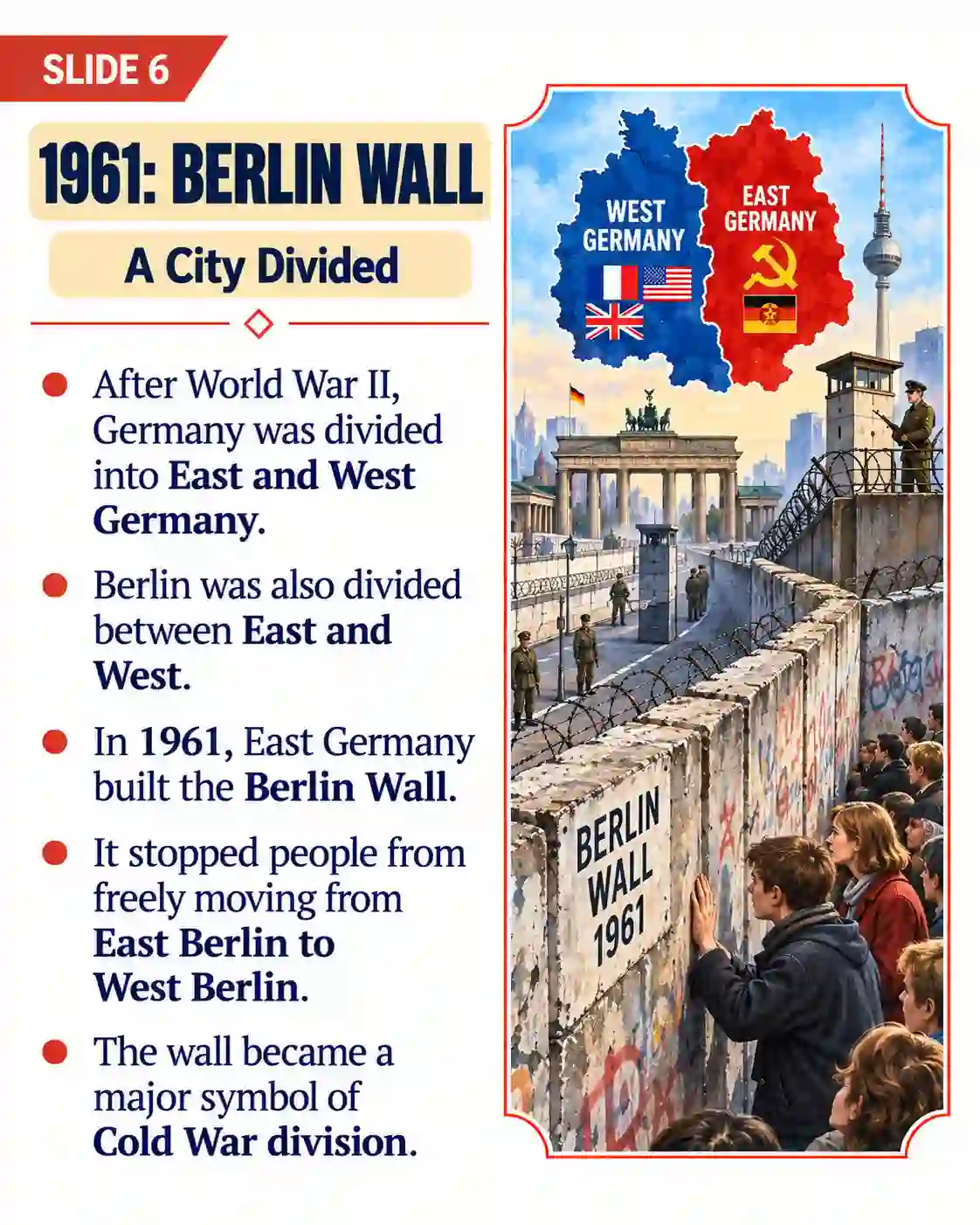
1961: BERLIN WALL
A City Divided
- After World War II, Germany was divided into East and West Germany.
- Berlin was also divided between East and West.
- In 1961, East Germany built the Berlin Wall.
- It stopped people from freely moving from East Berlin to West Berlin.
- The wall became a major symbol of Cold War division.
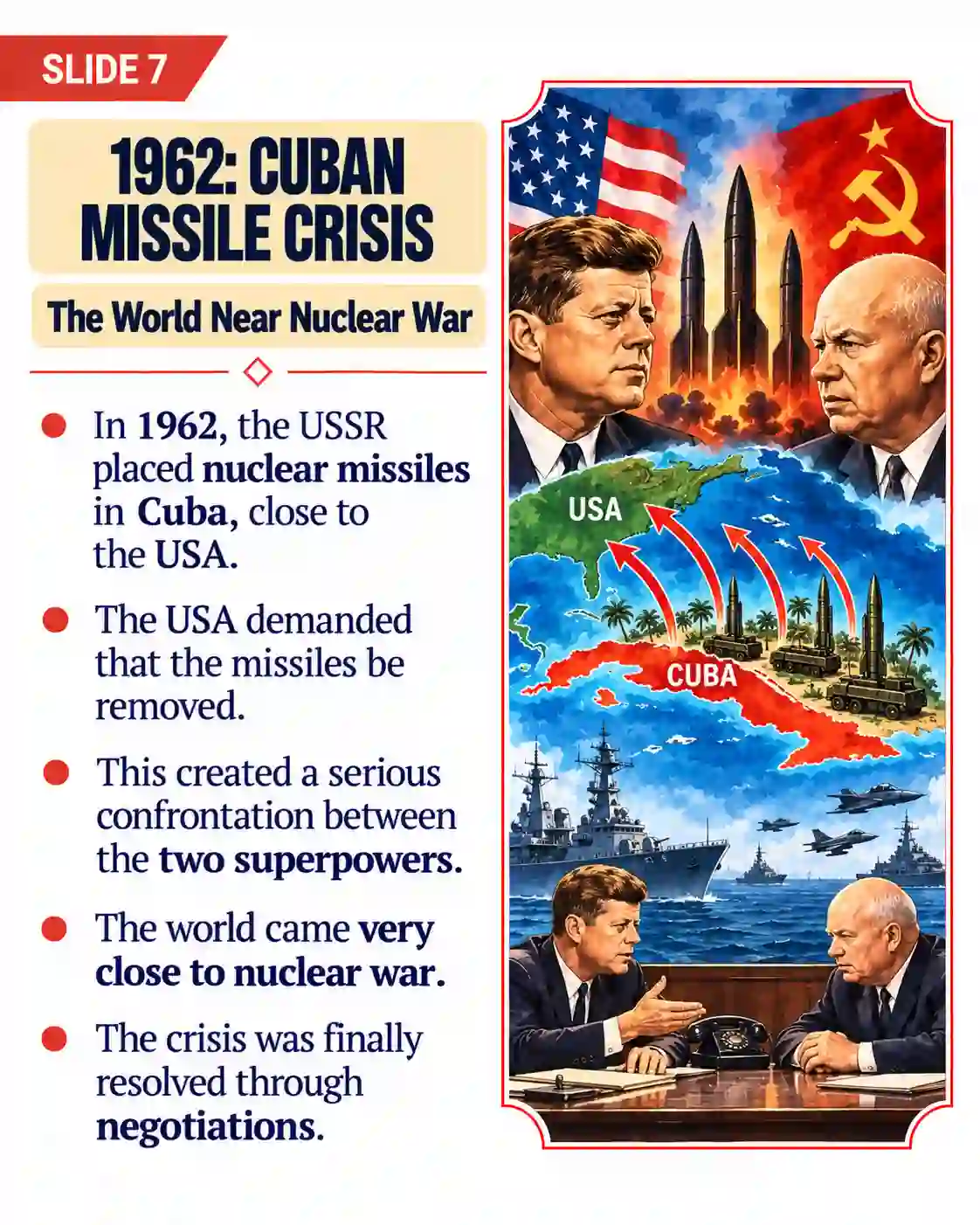
1962: CUBAN MISSILE CRISIS
The World Near Nuclear War
- In 1962, the USSR placed nuclear missiles in Cuba, close to the USA.
- The USA demanded that the missiles be removed.
- This created a serious confrontation between the two superpowers.
- The world came very close to nuclear war.
- The crisis was finally resolved through negotiations.
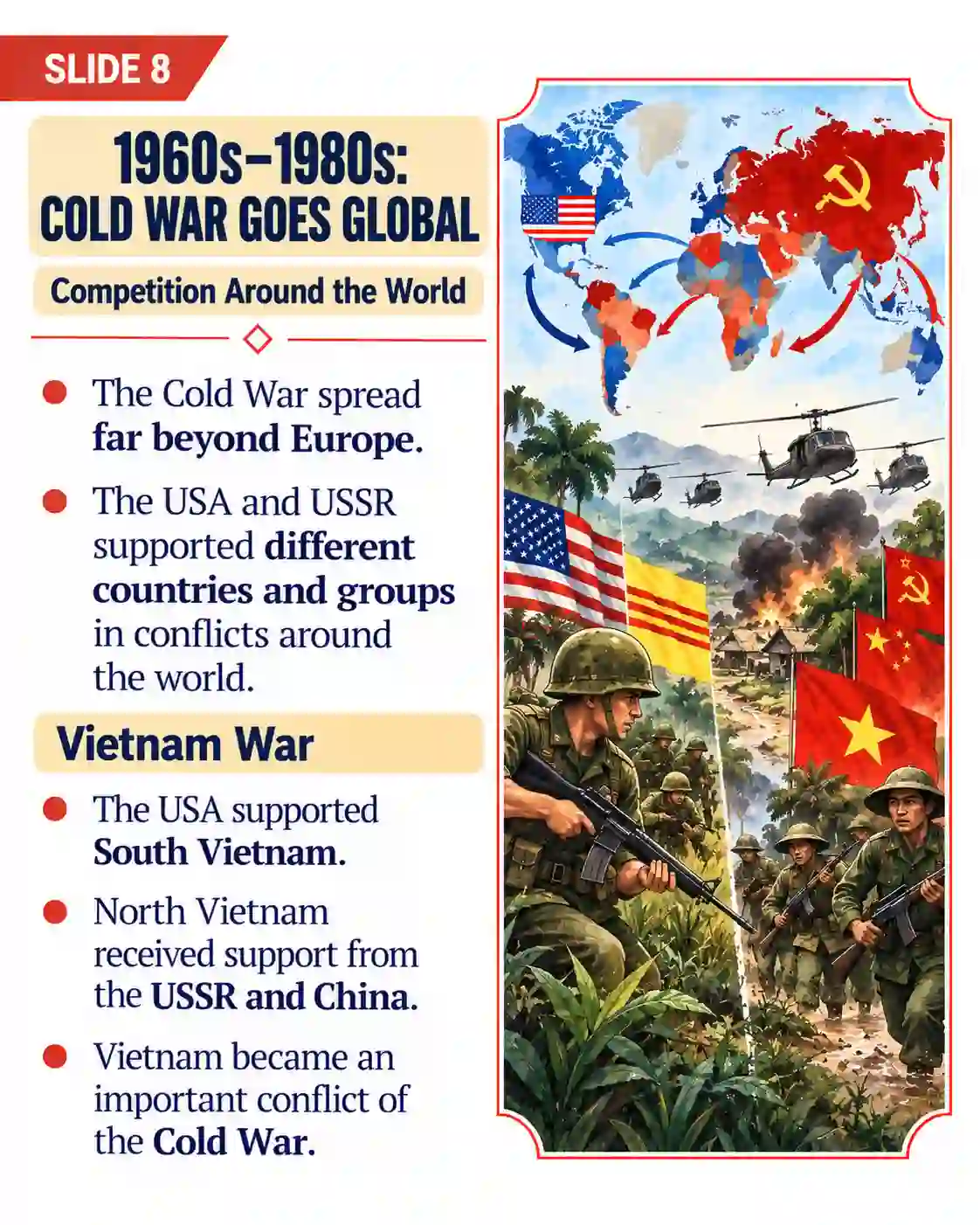
1960s–1980s: COLD WAR GOES GLOBAL
Competition Around the World
- The Cold War spread far beyond Europe.
- The USA and USSR supported different countries and groups in conflicts around the world.
Vietnam War
- The USA supported South Vietnam.
- North Vietnam received support from the USSR and China.
- Vietnam became an important conflict of the Cold War.
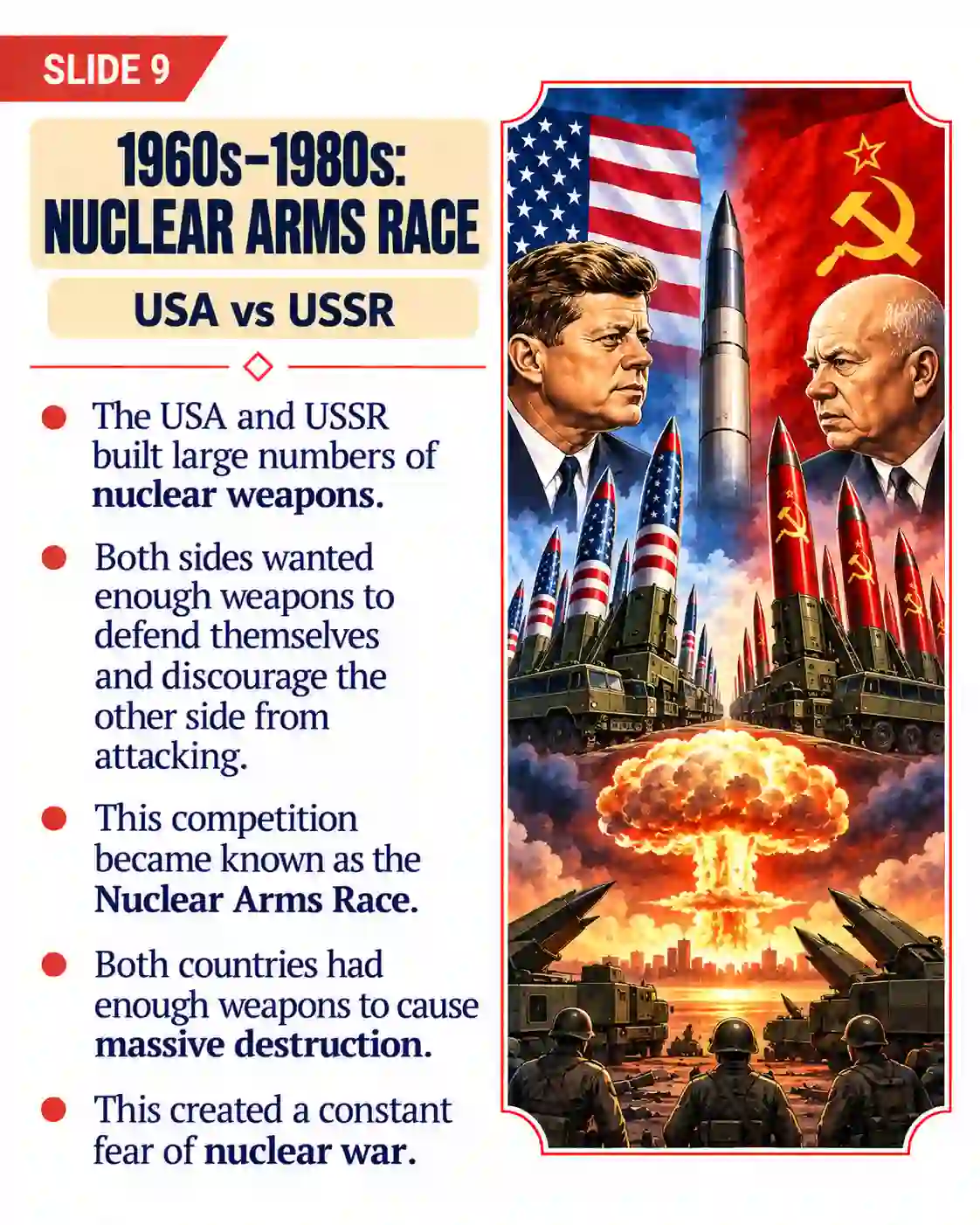
1960s–1980s: NUCLEAR ARMS RACE
USA vs USSR
- The USA and USSR built large numbers of nuclear weapons.
- Both sides wanted enough weapons to defend themselves and discourage the other side from attacking.
- This competition became known as the Nuclear Arms Race.
- Both countries had enough weapons to cause massive destruction.
- This created a constant fear of nuclear war.
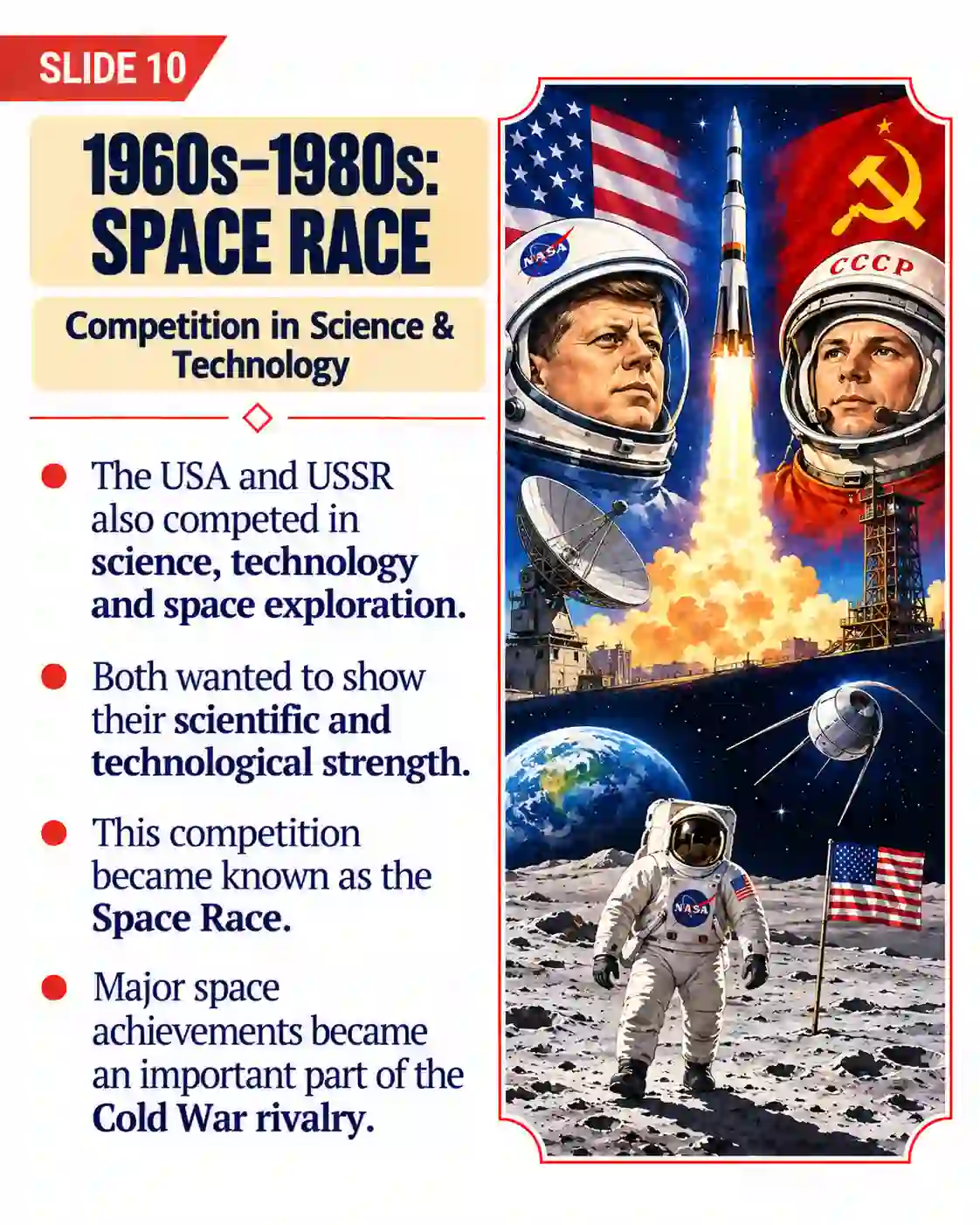
1960s–1980s: SPACE RACE
Competition in Science & Technology
- The USA and USSR also competed in science, technology and space exploration.
- Both wanted to show their scientific and technological strength.
- This competition became known as the Space Race.
- Major space achievements became an important part of the Cold War rivalry.
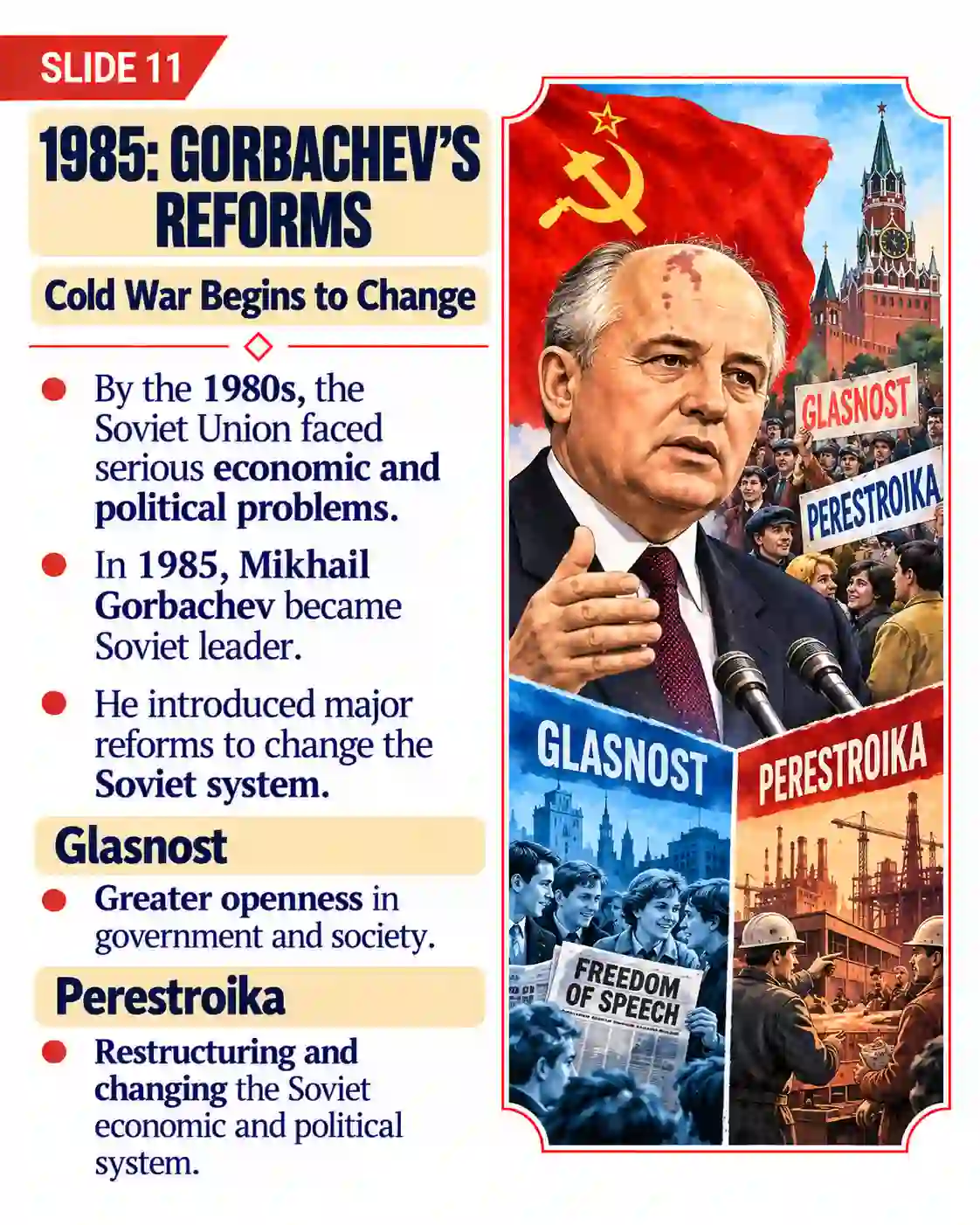
1985: GORBACHEV'S REFORMS
Cold War Begins to Change
- By the 1980s, the Soviet Union faced serious economic and political problems.
- In 1985, Mikhail Gorbachev became Soviet leader.
- He introduced major reforms to change the Soviet system.
Glasnost
- Greater openness in government and society.
Perestroika
- Restructuring and changing the Soviet economic and political system.
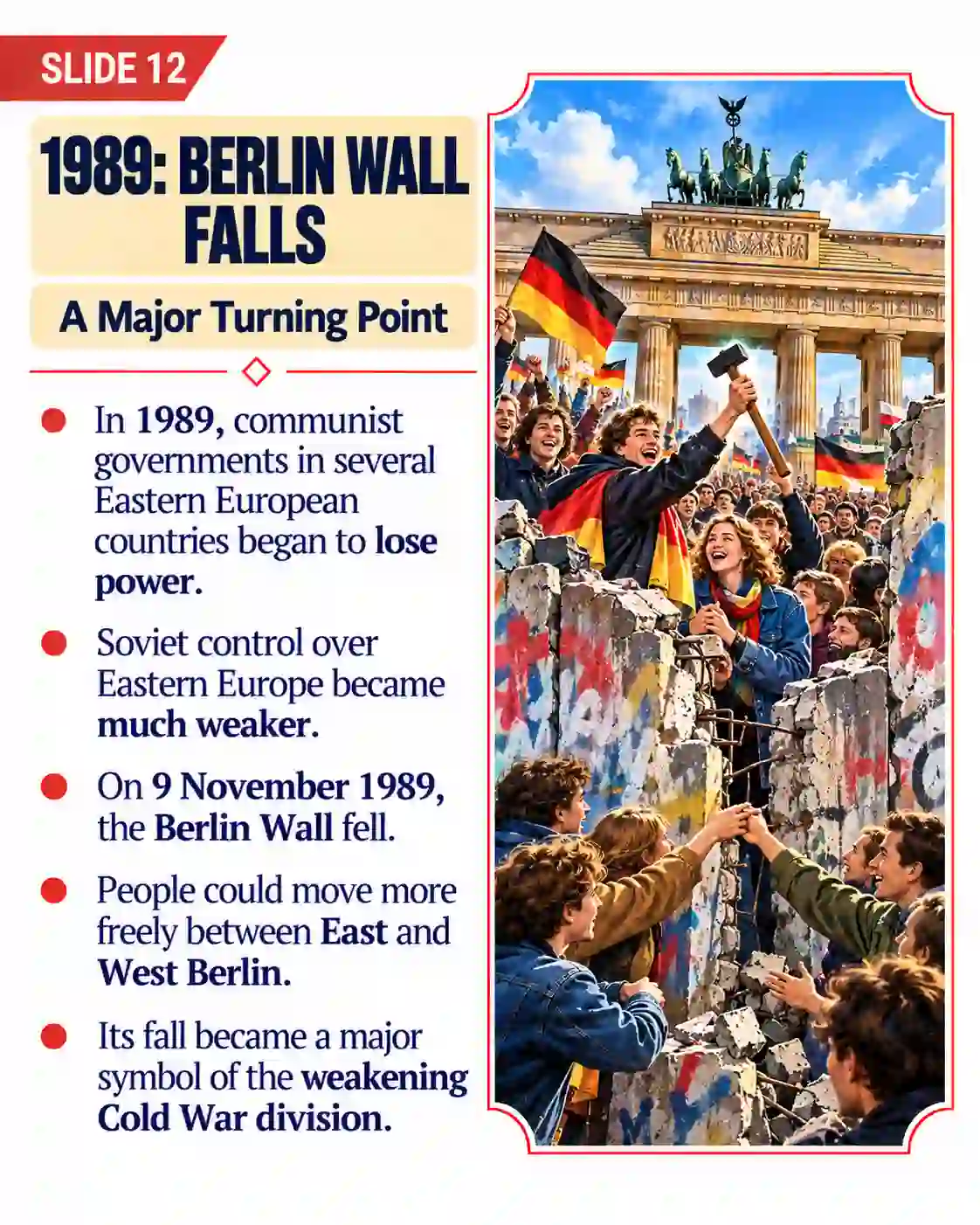
1989: BERLIN WALL FALLS
A Major Turning Point
- In 1989, communist governments in several Eastern European countries began to lose power.
- Soviet control over Eastern Europe became much weaker.
- On 9 November 1989, the Berlin Wall fell.
- People could move more freely between East and West Berlin.
- Its fall became a major symbol of the weakening Cold War division.
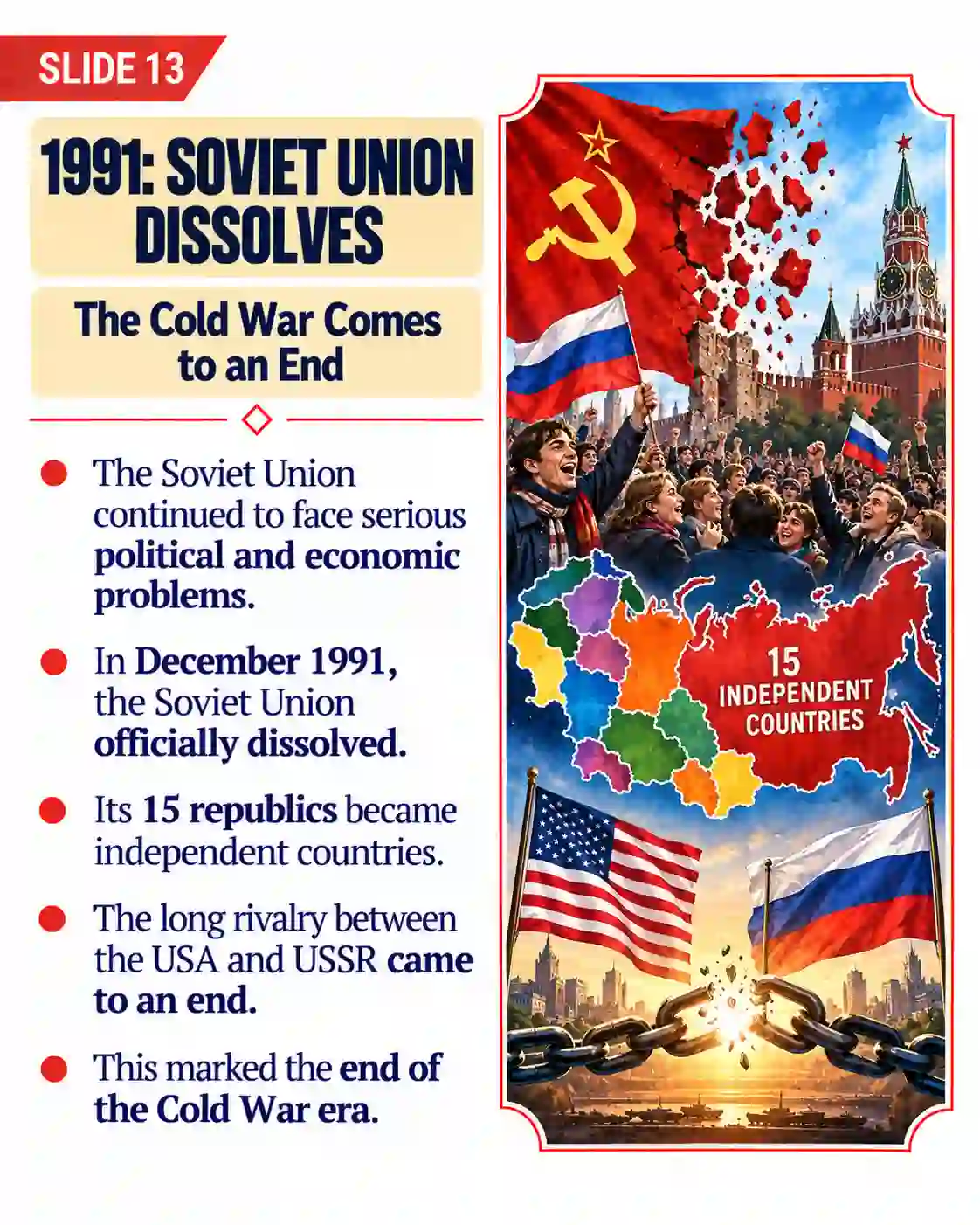
1991: SOVIET UNION DISSOLVES
The Cold War Comes to an End
- The Soviet Union continued to face serious political and economic problems.
- In December 1991, the Soviet Union officially dissolved.
- Its 15 republics became independent countries.
- The long rivalry between the USA and USSR came to an end.
- This marked the end of the Cold War era.
You must be logged in to add a comment.
Login to Comment